Chapter 8
HETG: Chandra High Energy Transmission Grating
8.1 Instrument Overview
HETG
is the High-Energy Transmission Grating
(Canizares et al. 2005). In operation
with the High Resolution Mirror Assembly (HRMA) and a focal plane
imager, the complete instrument is referred to as the HETGS - the
High-Energy Transmission Grating Spectrometer. The HETGS provides
high resolution spectra (with E/∆E up to 1000) between 0.4 keV
and 10.0 keV for point and slightly extended (few arc seconds)
sources. Although HETGS operation differs from proportional
counter and CCD spectrometers, standard processing of an HETGS observation produces familiar spectrometer data products: PHA, ARF,
and RMF files. These files can then be analyzed with standard
forward-folding model fitting software, e.g., Sherpa, XSPEC, ISIS , etc.The HETG itself consists of two sets of gratings, each with different
period. One set, the Medium Energy Grating (MEG), intercepts rays
from the outer HRMA shells and is optimized for medium energies.
The second set, the High Energy Gratings (HEG), intercepts rays from
the two inner shells and is optimized for high energies. Both
gratings are mounted on a single support structure and therefore are used
concurrently. The two sets of gratings are mounted with their rulings
at different angles so that the dispersed images from the HEG and
MEG will form a shallow X centered at the undispersed (zeroth
order) position; one leg of the X is from the HEG, and the other
from the MEG. The HETG is designed for use with the spectroscopic
array of the Chandra CCD Advanced Imaging Spectrometer (ACIS-S)
although other detectors may be used for particular applications. A
summary of characteristics is given in Table 8.1.
The Instrument Principal Investigator for the HETG is Dr. Claude
Canizares of the MIT Center for Space Research. See Canizares
et al. (2005) for a thorough description of the instrument
and its performance.
Table 8.1: HETG(S) Parameters
| HETGS Range: | 0.4−10.0 keV, 31−1.2Å |
| HEG Range: | 0.8−10.0 keV, 15−1.2 Å |
| MEG Range: | 0.4−5.0 keV, 31−2.5 Å |
| Effective Area (see Figures 8.7 8.8): | 7 cm2 @ 0.5 keV |
| ( MEG+HEG first orders, | 59 cm2 @ 1.0 keV |
| with ACIS-S) | 200 cm2 @ 1.5 keV |
| 28 cm2 @ 6.5 keV |
| Resolving Power (E/∆E,
λ/∆λ) | |
| HEG: | 1070−65 (1000 @ 1 keV,
12.4 Å) |
| MEG: | 970−80 (660 @ 0.826 keV,
15 Å) |
| Resolution: | |
| ∆E: | 0.4−77 eV FWHM |
| ∆λ, HEG: | 0.012 Å FWHM |
| ∆λ, MEG: | 0.023 Å FWHM |
| Absolute Wavelength Accuracy: (w.r.t. "theory") | |
| HEG | ±0.006 Å |
| MEG | ±0.011 Å |
| Relative Wavelength Accuracy: (within and between obs.) | |
| HEG | ±0.0010 Å |
| MEG | ±0.0020 Å |
| HEG angle on ACIS-S: | −5.235° ±0.01° |
| MEG angle on ACIS-S: | 4.725° ±0.01° |
| HETGS Rowland spacing | 8632.65 mm (flight installed) |
| Wavelength Scale: | |
| HEG | 0.0055595 Å / ACIS pixel |
| MEG | 0.0111200 Å / ACIS pixel |
| HETG Properties: | |
| Diffraction Efficiency: | 2.5% @ 0.5 keV (MEG) |
| (single-side, first order) | 19% @ 1.5 keV (MEG & HEG) |
| 9% @ 6.5 keV (HEG) |
| HETG Zeroth-order Efficiency: | 4.5% @ 0.5 keV |
| 8% @ 1.5 keV |
| 60% @ 6.5 keV |
| Grating Facet Average Parameters | |
| HEG and MEG bar material: | Gold |
| HEG / MEG period: | 2000.81 Å , / 4001.95 Å |
| HEG / MEG Bar thickness: | 5100 Å , / 3600 Å |
| HEG / MEG Bar width: | 1200 Å , / 2080 Å |
| HEG / MEG support: | 9800 Å, / 5500 Å polyimide |
|
8.1.1 Examples of Observations with the HETGS
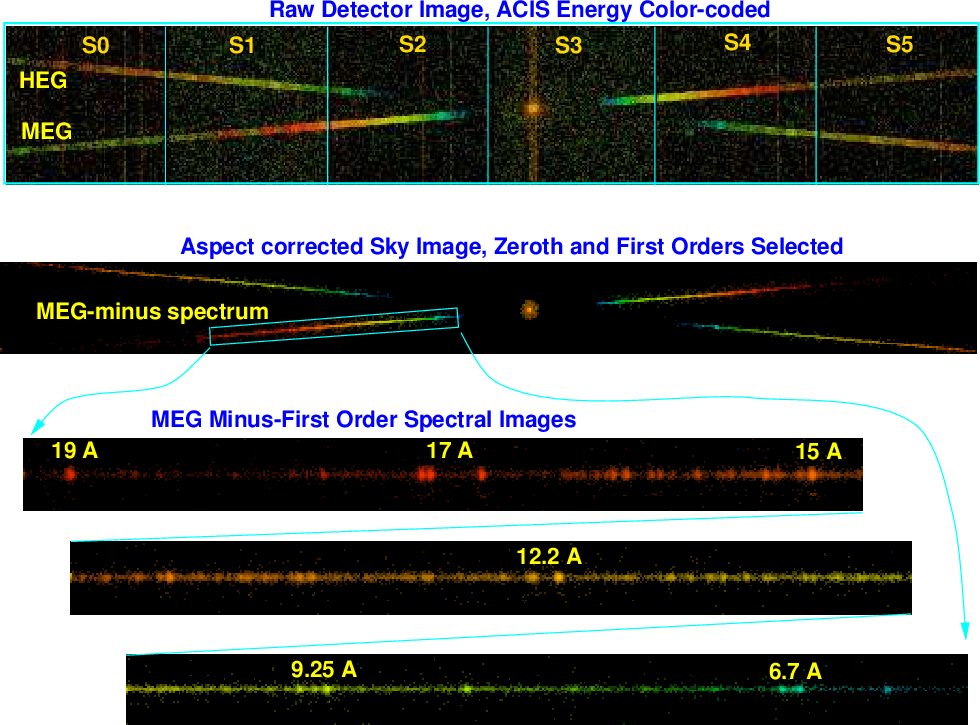
An example of an HETGS observation is presented in
Figure 8.1 using data from an observation of Capella,
Obsid 1318. The top panel shows an image of detected events on the
ACIS-S detector with the image color indicating the ACIS-determined
X-ray energy (see WWW version if this is not in color.) In this
detector coordinate image (TDETX, TDETY), the features are broad due
to the nominal dither motion which serves to average over detector
non-uniformities. The ACIS-S chips are numbered S0 to S5 from left
to right, with the aim point in S3 where the bright zeroth-order image
is visible and includes a vertical frame-transfer streak (a trailed
image). The HRMA optical axis passes through S3 approximately 6 mm
from the S2-S3 chip gap. For further information see
Figure 6.1 and related text.
HETG-diffracted photons are visible in Figure 8.1
forming a shallow "X" pattern; the full opening angle between the
HEG and MEG spectra is 9.96°. The back illuminated (BI)
chips are S1 and S3. The S1 location was chosen to enhance the first
order MEG spectrum since back illumination provides higher
efficiency below 1 keV. The location of the zeroth-order for any
particular observation, however, may be adjusted by offset pointing in
order to select the energies of the photons that will be placed in the
gaps between the chips. Details on gaps are presented in
Section 8.2.1.
The middle panel of Figure 8.1 shows an image after
the data have been aspect corrected and data filters applied to
include only valid zeroth and first-order events. Note that this
image was created using Sky coordinates that were rotated and had
their y-axis sign "flipped" in order to match the detector coordinates
view in the top panel. The lower set of panels shows an expanded view
of the MEG minus-first-order spectrum with emission lines clearly
visible. Wavelengths are assigned based on the diffraction angle of
the events, that is, how far the events are from the zeroth-order
image. Using the grating equation in Section 8.1.3, absolute wavelengths can be
assigned based on the dispersion angle. A spectrum of the source is
then created by binning the events into energy or wavelength bins; the
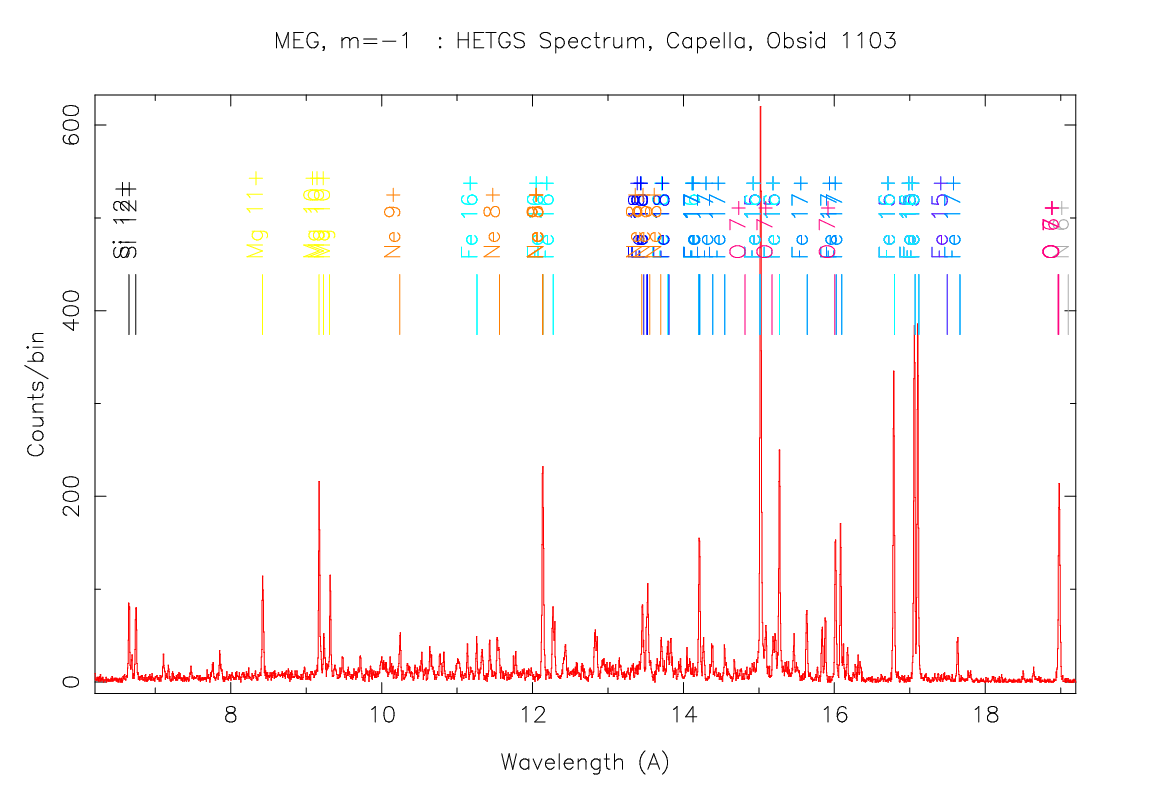
spectrum from another Capella observation is shown in
Figure 8.2.
Note: The dispersion distance on the detector is essentially
linear in wavelength. Thus, wavelength is the natural unit for this
high-resolution x-ray spectrometer. The conversion between energy and
wavelength is provided by the relation: E ×λ = hc = 12.39852 keVÅ.
Each of the "arms" of the HETGS diffracted X pattern yields a
first-order spectrum identified by type (HEG or MEG) and sign of
the order (plus or minus.) Using ARF's (ancillary response files)
and RMF's (response matrix files) these spectra can be analyzed in an
XSPEC-like framework. Additionally, the CXC software package
"Interactive Spectral Interpretation System" (ISIS,
http://space.mit.edu/ASC/ISIS/)
can be used to identify spectral lines, e.g., as seen in
Figure 8.2.
Figure 8.1: HETGS observation
of Capella, Obsid 1318. The top panel shows an image of detected
events on the ACIS-S detector with the image color indicating the
ACIS-determined X-ray energy. The bright zeroth-order image is
visible on CCD S3 and includes a trailed image (the vertical
frame-transfer streak). Diffracted photons are visible forming a
shallow "X" pattern; the HEG and MEG spectra are indicated. The
images are broad due to dither of the spacecraft. The middle panel
shows an image after the data have been aspect corrected and
selections applied to include only valid zeroth and first-order
events; note that the Y axis has been flipped from the normal Sky
view to match the detector coordinates view in the top panel.
Finally, the lower panel shows an expanded view of the MEG
minus-first-order spectrum with emission lines clearly visible.
Figure 8.2: HETGS Capella
spectrum, MEG m=−1, Obsid 1103. The first-order events identified
in the MEG minus-side "arm" of the HETG X pattern are
assigned wavelengths by CXC pipeline software according to the
grating equation and known instrument parameters. These values are
then binned to produce a pulse height analysis spectrum (
pha2.fits file) which is plotted here. The ISIS software
package available from the CXC has also been used to indicate the
location of expected emission lines based on a simple source model.
8.1.2 Scientific Objectives and Grating Heritage
The HETGS allows one to probe the physical parameters of emitting
regions of all classes of X-ray sources, including stars, X-ray
binaries, supernova remnants, galaxies, clusters of galaxies, quasars,
and interstellar and intergalactic material. Plasma diagnostic
techniques applied to emission lines, absorption lines and absorption
edges will convey source properties such as temperatures, ionization
states, densities, velocities, elemental abundances, and thereby
structure, dynamics, and evolution of various classes of sources. The
energy band amenable to observation is extremely rich in lines from
both coronal and photo-ionized plasmas, containing the L-shell lines
from ionization stages of Fe XVII to Fe XXIV and the K-shell lines of
hydrogenic and helium-like ions of oxygen through nickel. The 6 keV
Fe K lines are well within the observable band. The highest
resolutions available will also allow detailed study of motions
through Doppler line shifts in supernova remnants, X-ray binaries,
turbulent intra-cluster or intra-galactic gas, or early-type galaxies
in clusters.Although gratings have flown on Einstein and EXOSAT, the HETGS shares only the basic operating principles with these. Advanced
grating technology has enabled achievement of greater efficiency and
increased dispersion. The Rowland geometry of the grating plate and
spectroscopic arrays maintains the telescope focal properties in the
dispersion direction by minimizing dispersed image aberrations and
hence contributes to improved spectral resolution.
8.1.3 HETGS Operating Principles
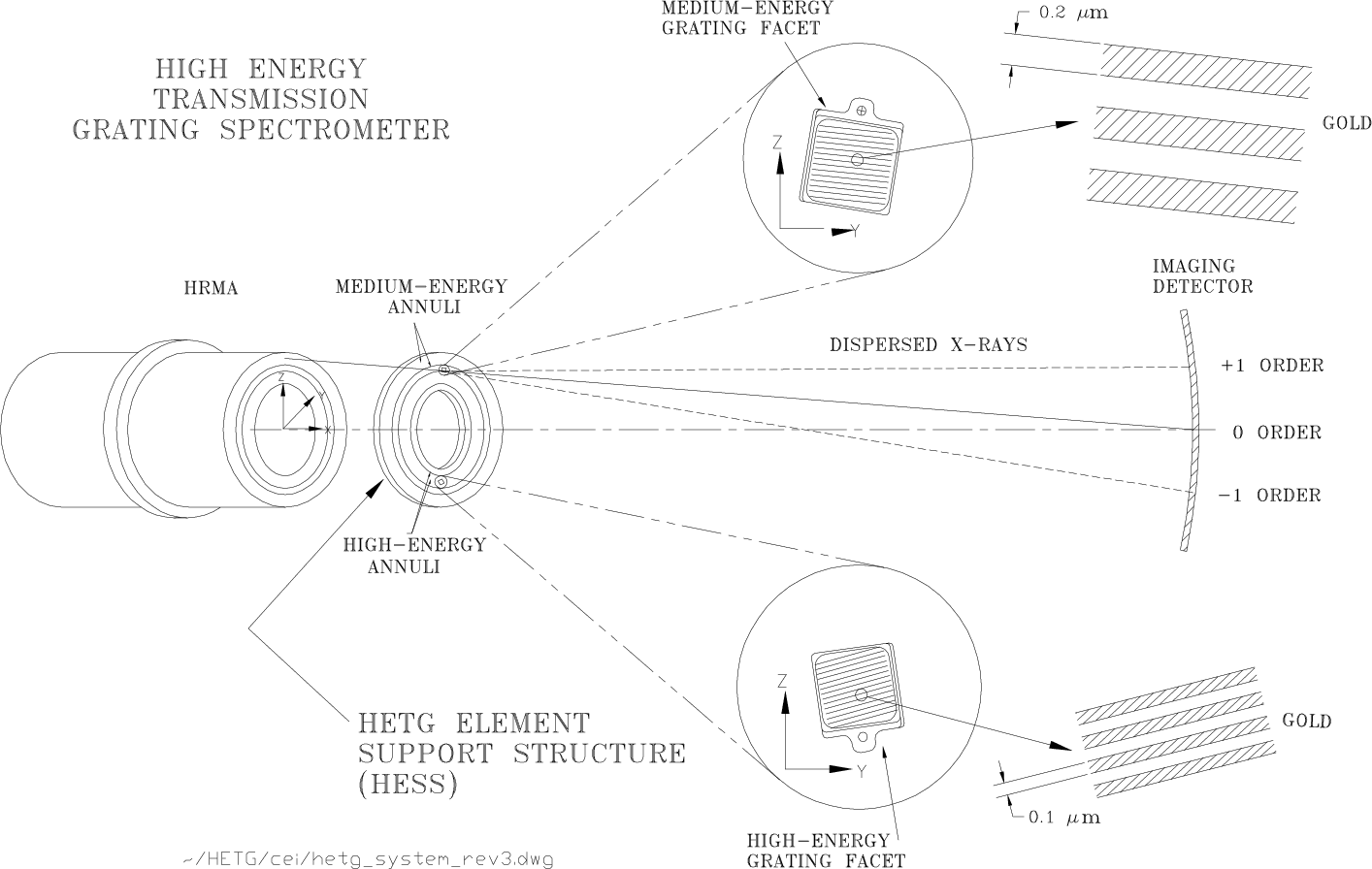
The HETG is mounted, and can be inserted, just aft of the HRMA as
shown in the schematic of the HRMA-HETG-detector system,
Figure 8.3. The HETG
provides spectral separation through diffraction. X-rays
from the HRMA strike the transmission gratings and are diffracted
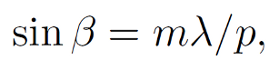
(in one dimension) by an angle β given according to the grating
equation
,
sinβ = m λ/ p , where m is the integer order number, λ is the
photon wavelength in angstroms, p is the spatial
period of the grating lines, and β is the dispersion angle. A
"normal" undispersed image is formed by the zeroth-order events,
m=0, and dispersed images are formed by the higher orders,
primarily the first-order, m=1.
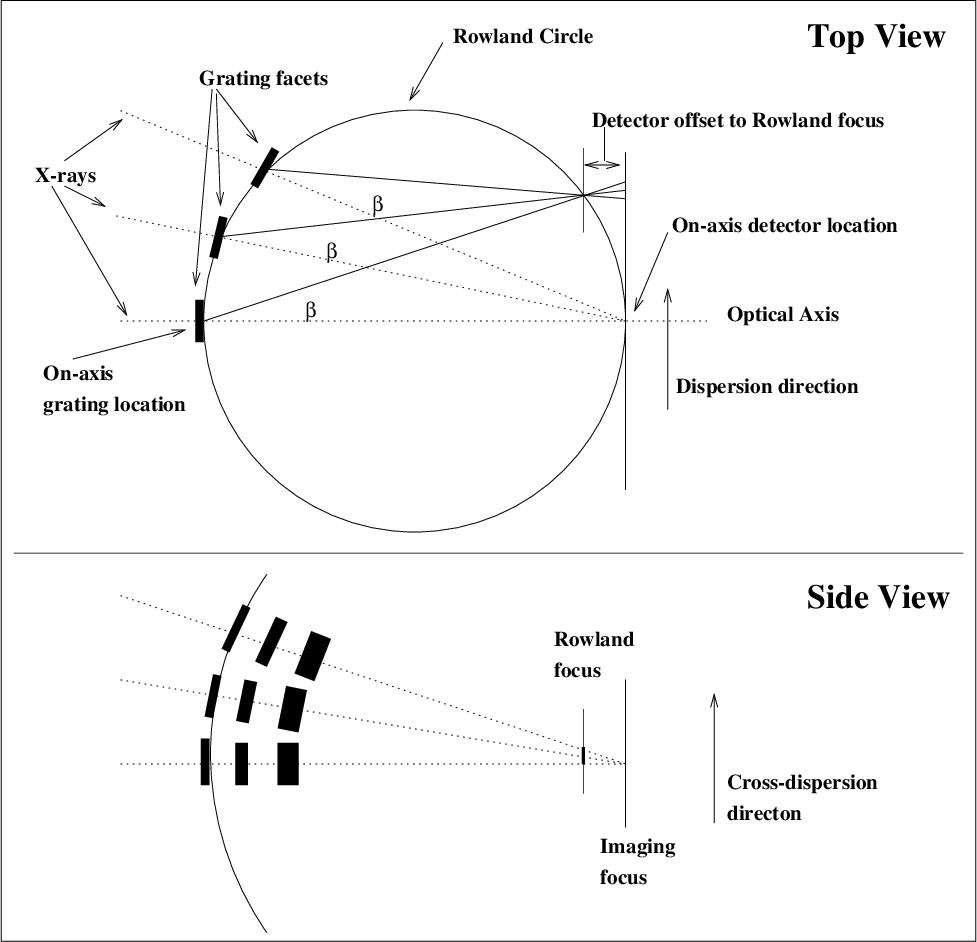
The HETGS-faceted Rowland design is shown in
Figure 8.4. The "Rowland circle" is a circle
whose diameter is simply the distance from the grating that would lie
on the optical axis to the point in the focal plane where the zeroth
order image is placed. The "Rowland torus" is formed by rotating the
circle about the line in the dispersion direction going through the
on-axis focus. Individual grating facets are mounted such that their
centers lie on the torus
. In the figure, the axis
of the torus is perpendicular to the page for the side view and lies
in the plane of the top view. Ideally, the detector is shaped to
follow the counterpart Rowland torus in the image plane. The result
is that the telescope focal properties in the dispersion direction are
maintained for a large range of diffraction angles, β, thereby
minimizing any grating-added optical aberrations.
An important parameter of the HETGS is the Rowland spacing, the
distance from the outer intersection of the HETG axis and Rowland
Circle to the HRMA focus. This Rowland spacing is what determines
the value of β in the grating equation. The value of the Rowland
spacing is listed in Table 8.1.
Order overlap and source confusion can be discriminated by the
intrinsic energy resolution of the CCD detector (ACIS-S is the
preferred detector for HETG spectroscopy since it has intrinsic
energy resolution and so can separate orders; the HRC may be used
if high time resolution is desired, but this choice is at the price of
using the focal plane detector's energy resolution to aid in order
separation). The form of a spectral image on the ACIS-S array is shown in Figure 8.1. The spectroscopic array
spans about 8 arc minutes × 48 arc minutes of the sky, though
image quality and resolving power degrade rapidly for sources more
than about 4 arcmin off-axis. For an on-axis source, the detector
edge in the dispersion direction causes a low energy cutoff of the
spectrum at about 0.4 keV for the MEG and 0.8 keV for the HEG.
Order selection and chip gaps are described more fully in Section 8.2.1.
Figure 8.3: A schematic layout of the
High Energy Transmission Grating Spectrometer. (Dimensions shown
are approximate.)
Figure 8.4: The Rowland geometry is shown
schematically. In the "Top" view, we are looking across the
dispersion direction. The diffraction angle is β. The geometry
is such that converging rays diffracted at a specific angle by the
gratings (which are located on the Rowland circle) will converge to a
point that is also on the Rowland circle. The dotted lines represent
zeroth-order rays and the solid lines represent the grating-diffracted first-order rays. The bottom panel ("Side" view) looks along the
dispersion direction at rays from a set of gratings arranged
perpendicularly to those in the "Top" view and schematically shows
the astigmatic nature of the spectrally focused image: since the
converging rays have not yet reached the imaging focus, they are
extended across the dispersion (by less than 100 microns).
8.1.4 HETG Physical Configuration
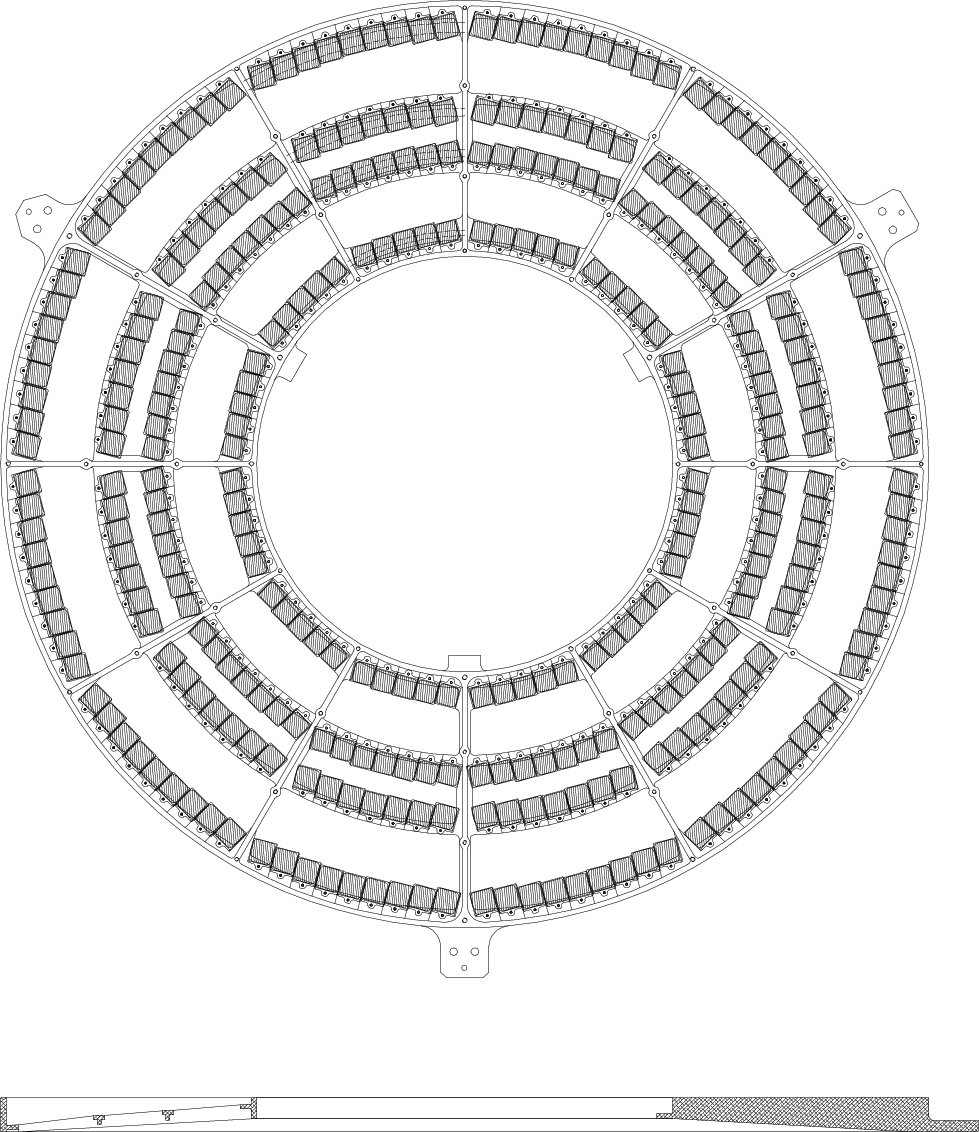
The HETG support structure (HESS)
is a circular aluminum plate (110 cm diameter by
6.35 cm thick) which can be swung into position behind the HRMA.
Mounted on the HESS are 336 grating facets
, each
about 25 mm square. The position and orientation of the HESS mounting
surfaces have been designed and machined to place each grating center
on a Rowland torus of diameter 8633.69 mm. A detailed drawing of the
HETG (HESS plus facets) is shown in Figure 8.5.The gratings cover the annular regions through which the X-rays
pass. The 192 grating facets on the outer two annuli (MEG) have a
period of 4001.95 Å. Tiling the inner two annuli are 144 (HEG)
gratings, which have a period of 2000.81 Å (see
Table 8.1). The two sets of gratings are mounted
with their rulings at different angles so that the dispersed images
from the HEG and MEG will form a shallow X centered at the
undispersed (zeroth order) position; one leg of the X is from the
HEG, and the other from the MEG. See Figure 8.1 for an example.
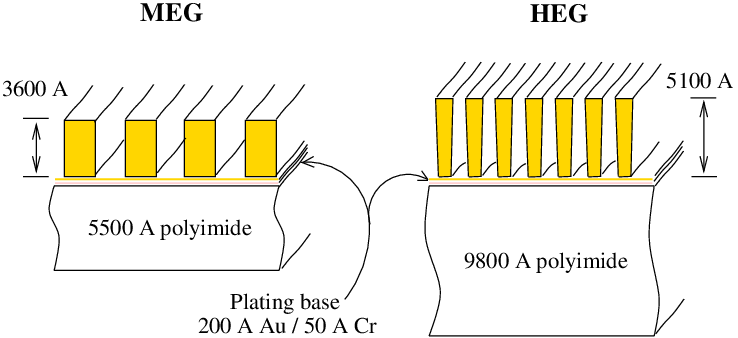
The HETG grating facets are
composed of
electro-plated gold bars supported on a polyimide substrate, as shown
schematically in Figure 8.6. The grating bar design
parameters, height and width, are nominally chosen to reduce
zeroth-order and maximize first-order intensities. Choosing to have
the bar width one-half of the grating period suppresses even orders
and provides maximum 1st order efficiency for a rectangular profile;
this is closely achieved for the MEG gratings. For the HEG gratings, the bar is wider and results in a higher 2nd order
efficiency and reduced 3rd order efficiency. The bar height choice
"tunes" the efficiency peak in energy by allowing X-rays to
constructively interfere in first order in the region where the gold
is partially transparent, primarily above 1.2 keV.
Figure 8.5: A front (upper) and
side (lower) view of the HETG support structure (HESS). The grating
facets are mounted to intercept the X-rays as they exit the HRMA; the
front view is from the HRMA i.e., what an approaching X-ray would
see. In the side view, the left cross-section shows that the four
support rings are in different planes due to the Rowland curvature.
The right cross-section is through a radial rib at one of the three
mounting "ears".
Figure 8.6: Cross-sections of the MEG and HEG membranes. The
soap-bubble-thin membranes of the HETG consist of gold bars attached
to a polyimide support layer. The MEG grating bars are close to
rectangular, typically with a height of 3600 Å and a bar-to-period
fraction of 52%. The HEG bars have a crudely trapezoidal shape,
narrower on the polyimide side as shown, typically 5100 A high with an
effective bar-to-period fraction around 60%.
8.2 Instrument Characteristics
When observing a point source, the HETGS can be viewed as a
black-box spectrometer characterized by its Effective Area and
Resolution. More specifically an HETGS count spectrum
produced by standard analysis (a PHA file) can be related to the
source spectrum through a grating ARF and grating RMF; because of
the spatially-dispersive operation of the HETGS, the RMF is also
referred to as the Line Response Function, LRF. Four first-order
spectra are obtained from an observation corresponding to the four
whiskers of the dispersed "X" pattern: the plus and minus first-orders
of the HEG and MEG gratings. Standard CIAO tools produce these
PHA files, ARFs, and RMFs for observers' use.In the sections that follow, information on the HETGS Effective Area
(ARFs) and Resolution (RMFs/LRFs) are given with an examination of
the components and effects that contribute to them. In addition two
other characteristics of the HETGS are briefly presented: the
Background event rate for an extracted spectrum and the Absolute
Wavelength accuracy.
8.2.1 HETGS Effective Area
The HETGS effective area, as encoded in the ARF, depends on the
HETG efficiency coupled with the HRMA effective area and the
ACIS efficiency. Additional effects can arise from the process of
selecting events, the effect of chip gaps, and the use of "ACIS ENERGY" to do order sorting. In this chapter we use the term ACIS ENERGY to describe the energy deduced from the ACIS pulse height.
Nominal HETGS ARFs
Combining the HETG diffraction efficiencies with the HRMA effective
area
and the ACIS-S detection efficiency
produces the system effective area as a function of energy, described
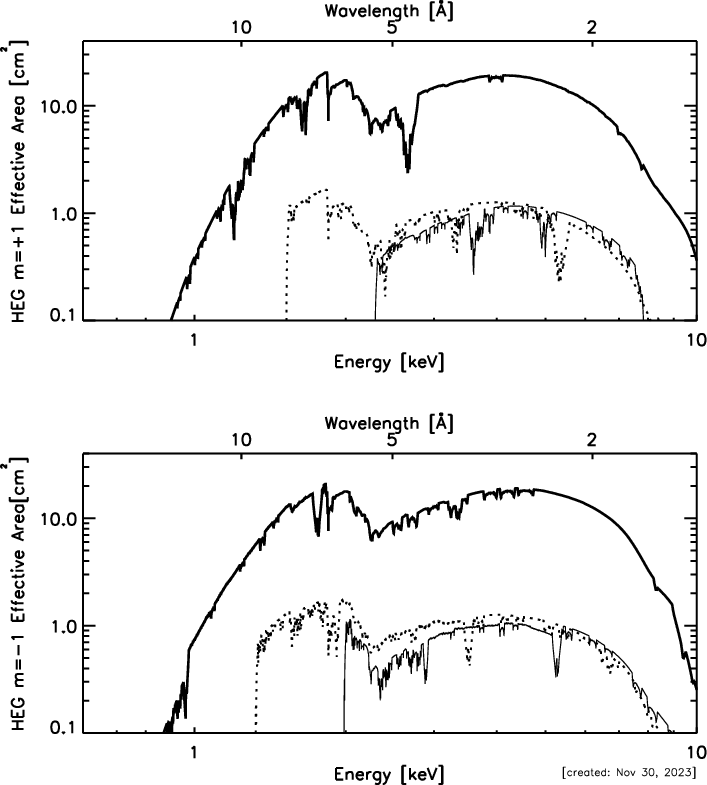
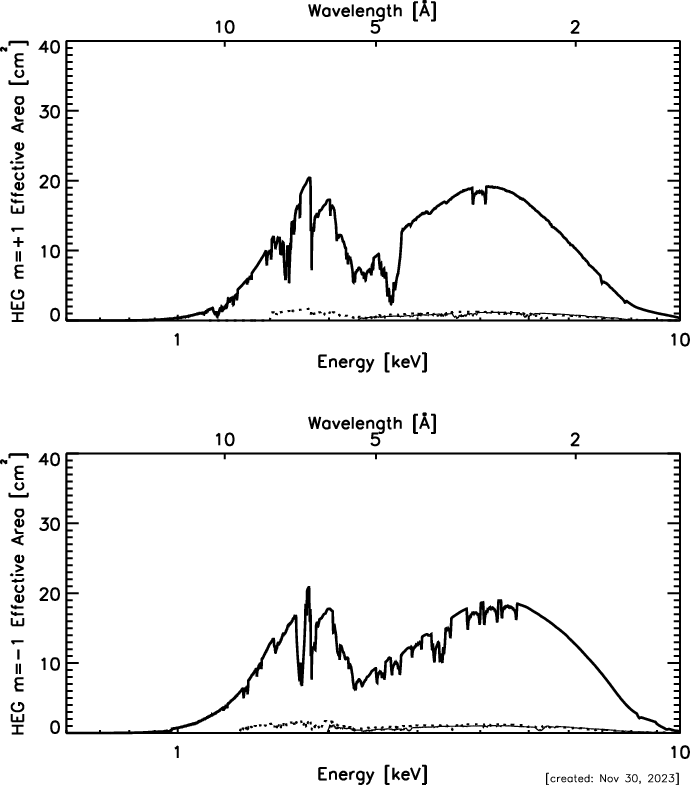
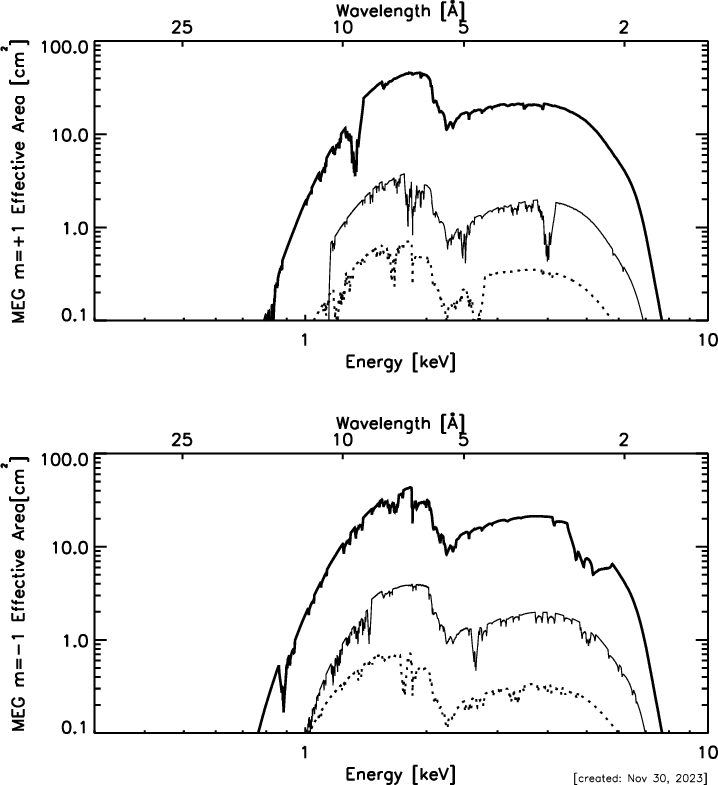
by an "ancillary response file" or ARF. Plots of HETGS
ARF's are shown in
Figures 8.7 and 8.9 which are plotted
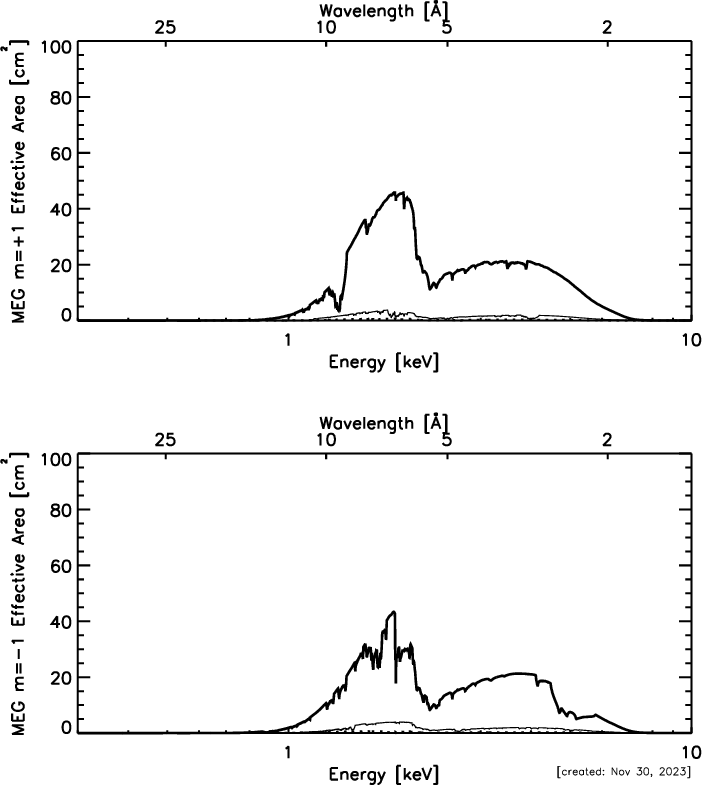
with log vertical axes; the same plots with linear vertical scale are
shown in Figures 8.8 and 8.10.
The values are plotted from ARF files created by the CXC CIAO tool
fullgarf. The effective area includes the effect of molecular
contamination on the ACIS filter (projected to the middle of the Cycle).The nominal plots shown here are for qualitative reference only; because the
fullgarf tool also accounts for a variety of other effects,
e.g., dither motion, bad pixels, QE non-uniformity, etc.,
grating ARFs are custom made for a given observation. The details of the
calibration of the ARF are discussed in Section 8.3.
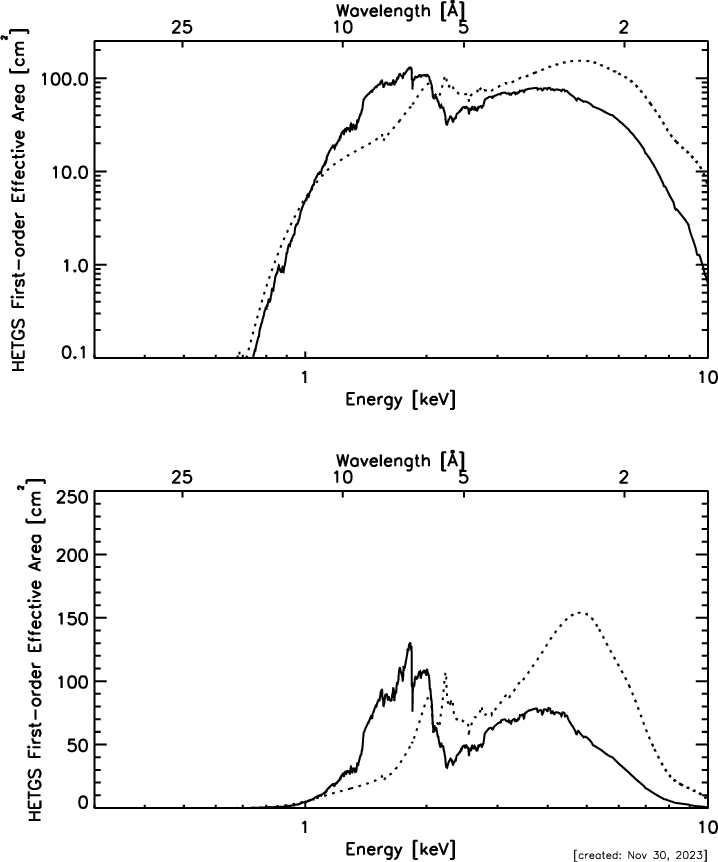
Since first-order photons from both the HEG and MEG gratings
provide information, to compare the HETGS with other instruments, it
is useful to plot the total HETGS effective area (the combined plus
and minus first-order areas of both the HEG and MEG); this is shown
by the solid curve in Figure 8.11. During an
observation the zeroth-order photons from HEG and MEG form a
single zeroth-order image; the effective area for this zeroth-order
image is also plotted on this figure (dotted line).
Note the dips caused by the gaps between chips in these figures. The
observatory is dithered
in order to spread the
signal across a large number of pixels. For HETGS observations,
sinusoidal motions with 8 arc second amplitude in spacecraft Y and
Z axes are used with periods of 1000.0 and 707.0 seconds,
respectively, creating a Lissajous pattern (see
Section 5.8.2). When the combination of the chip gaps
and dither are accounted for, a "pitch fork" dip occurs at each gap
region in the ARFs. Although effects of this motion are removed in
on-ground processing, observers are advised to avoid placing spectral
features of interest near the gaps. More information concerning gaps
are in the next section. The effective areas shown in
Figure 8.7-8.11 are based on an
integration over the full LSF. Most of the flux in a line will be
contained within a circle of diameter 4 arcsec. The user might wish to
note that in data processing, the pipeline software keeps only events
that are in a spatial window that lies within 3 arcsec of the
dispersion axis. This aperture guarantees that a high fraction,
97-99%, of the signal flux is retained while minimizing the
contribution of the background. Further discussion of the spatial
distribution of events can be found for the HRMA PSF in
Chapter 4 and for the
HETGS in Section 8.2.2 below.
Figure 8.7: The HETGS HEG effective area, integrated over the PSF, is shown with energy
and wavelength scales. The m=+1,+2,+3 orders (falling on ACIS chips S5, S4, S3; left to right) are displayed in the top panel and
the m=−1,−2,−3 orders (falling on ACIS chips S0, S1, S2; left to
right) are in the bottom panel. The thick solid lines are first
order; the thin solid line is third order; and the dotted line is
second order.
Figure 8.8: The HETGS HEG effective area: same caption as previous figure, except the
vertical scale is now linear.
Figure 8.9: The HETGS MEG
effective area, integrated over the PSF is shown with energy and
wavelength scales. The m=+1,+2,+3 orders (falling on ACIS chips
S5, S4, S3; left to right) are displayed in the top panel and the
m=−1,−2,−3 orders (falling on ACIS chips S0, S1, S2; left to
right) are in the bottom panel. The thick solid lines are first
order; the thin solid line is third order; and the dotted line is
second order.
Figure 8.10: The HETGS MEG effective area: same caption as previous figure, except the
vertical scale is now linear.
Figure 8.11: The modelled total first-order (solid curve) and zeroth-order
(dotted curve) effective area, integrated over the PSF, of the
HRMA-HETG-ACIS-S combination, as a function of energy. The
first-order data are the same as those plotted in
Figures 8.7 and 8.9. The plotted
first-order values are the sums of the area at a particular energy
from both orders (+/-) of both MEG and HEG spectra. Both a
log-log and a log-linear version are shown.
HETG Grating Efficiency
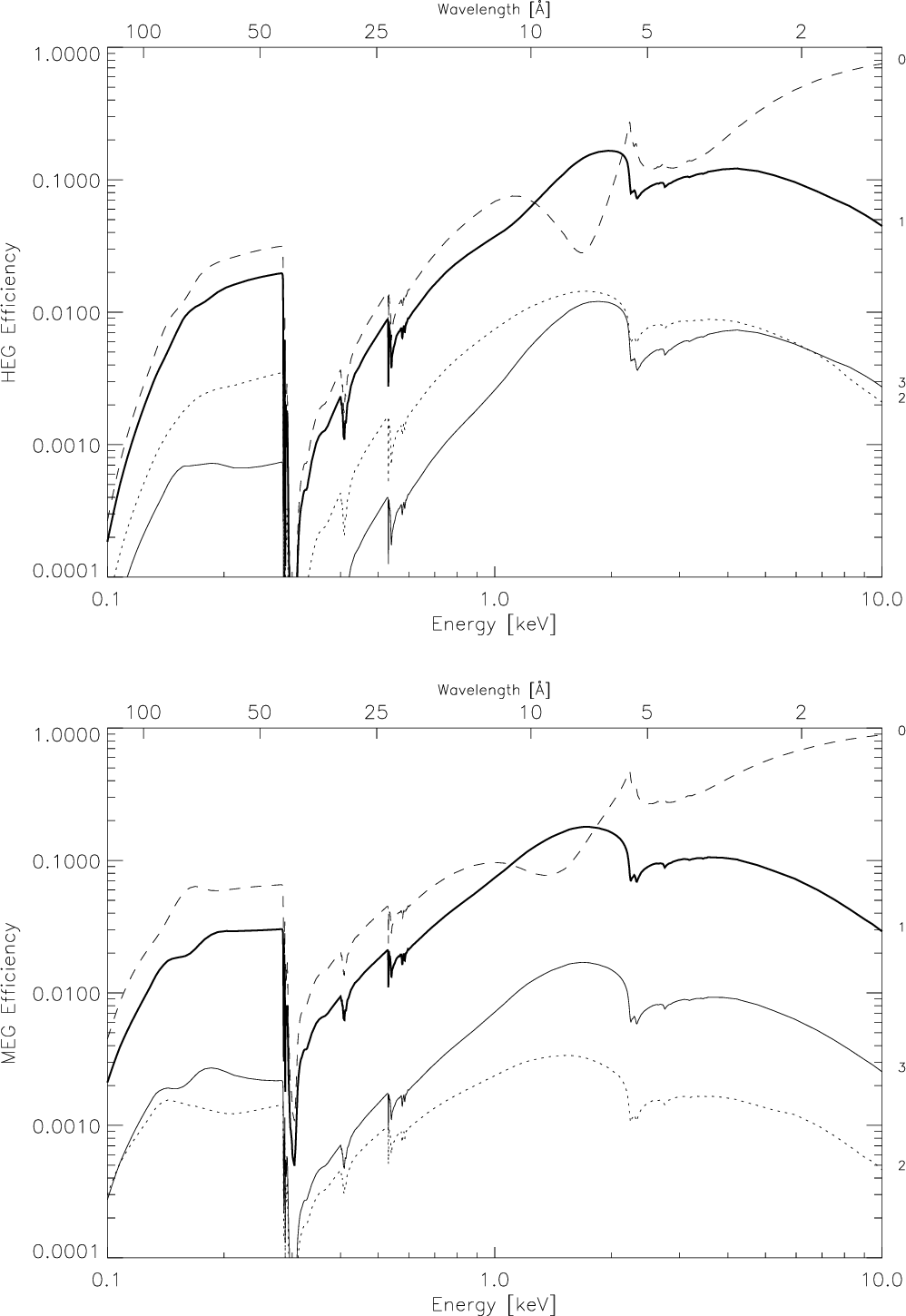
The HETG contribution to the effective area comes in through the
efficiencies of the HETG gratings; the values of these are shown in
Figure 8.13. All calibration data support the modeling
assumption that the positive order efficiencies are equal to the
negative order efficiencies. These efficiencies are primarily based on
laboratory measurements of each facet, synchrotron reference grating
corrections, improved polyimide transmission models, and updated gold
optical constants as described in Flanagan et al., (2000). Slight
adjustments to the HETG efficiencies have been determined using
in-flight data by comparing the HEG and MEG spectra of many sources.
The adjustments are mostly less than 10%; see Marshall (2005) for
details.
In an update (Marshall 2012) included in CalDB 4.4.7 and later, the
HEG and MEG agree now at the ∼ 1% level.
A number of systematic effects at the 10% level have now been
accounted for in the HETGS effective area via adjustments to
the grating efficiencies. Observations of
blazars (Marshall 2012) have been used to verify these corrections.
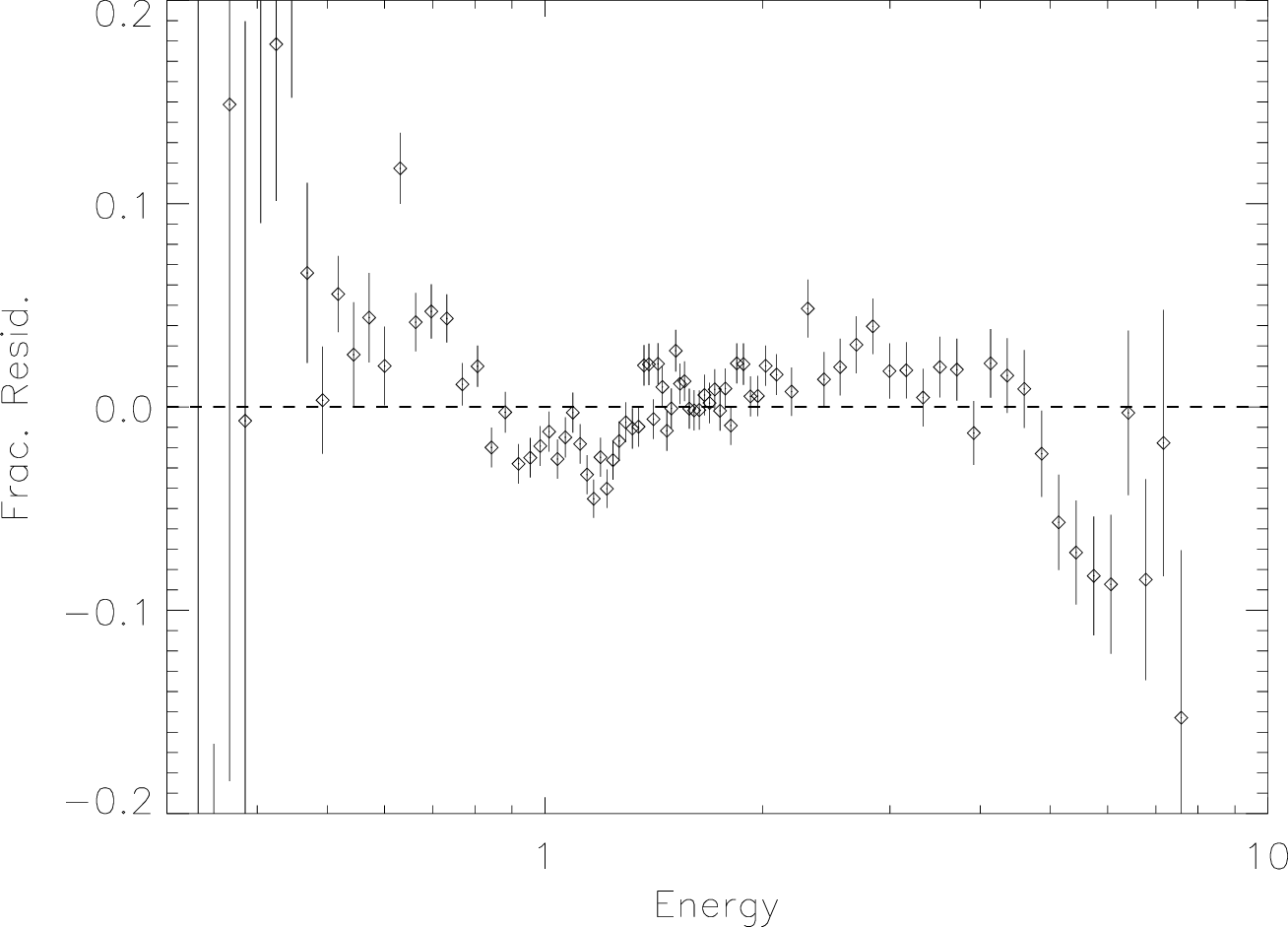
Relative systematic errors from curved power-law spectral fits
are generally less than 3% (0.5 - 8.0 keV)
on small scales (see Figure 8.12).
Preliminary results from cross-calibration with XMM-Newton indicate
that measured fluxes
agree to better than 10% (Smith & Marshall 2012).
Figure 8.12:
The average residuals for curved power-law fits to the HETGS
data for BL Lac objects. For most of the HETGS range, the
systematic deviations are not significant or are less than 3%.
See Marshall (2012) for details.
Figure 8.13: HEG (upper
panel) and MEG (lower panel) efficiencies as a function of energy.
The values plotted are the mirror-weighted efficiency into a single
plus, minus, or zero order (labelled on the right edge). The dashed
line is zeroth order; the thick solid line is first order. Note that
the relative strengths of the third orders (thin solid lines) are
comparable, whereas the second order strengths (dotted lines) are
significantly different between the HEG and MEG.
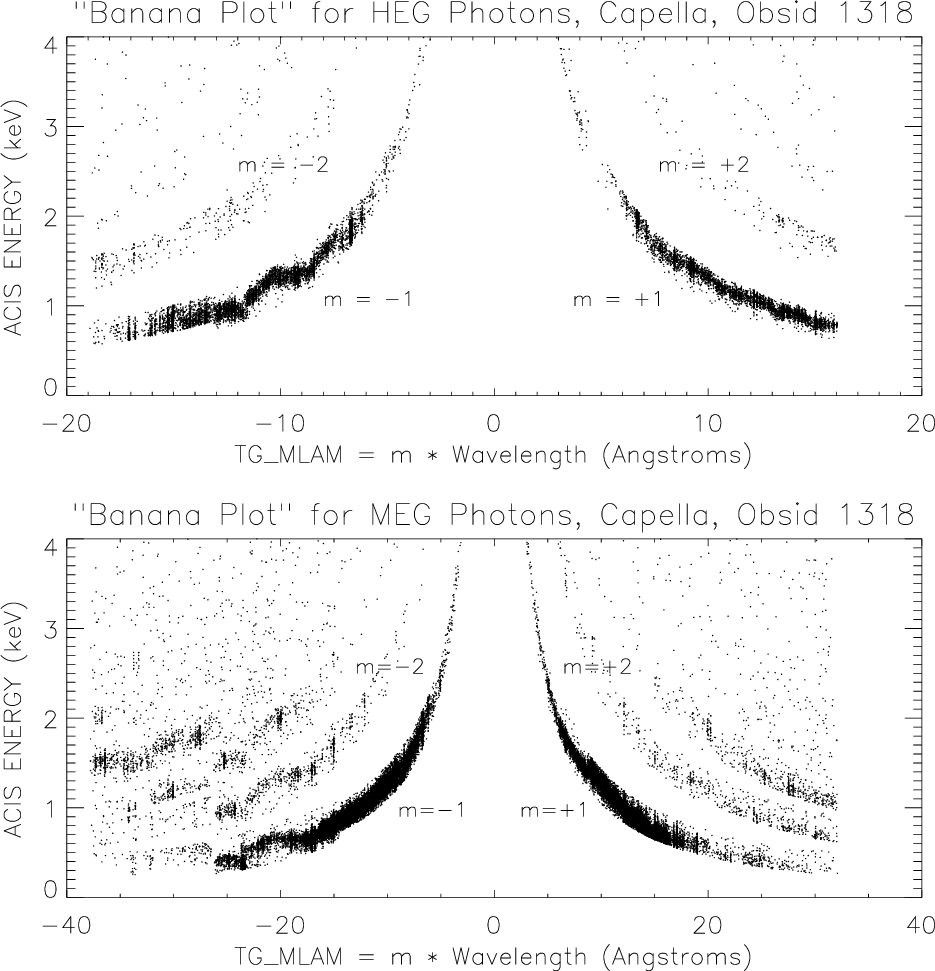
ACIS-S Order Sorting Effects
One of the advantages of using the ACIS-S as the HETG readout
detector is the ability of ACIS to determine the energy of detected
X-rays. This crude (by HETGS standards) energy measure can be used
to determine the diffraction order of the photon, i.e., perform
"order sorting", as shown in the "banana plot" of
Figure 8.14.During data analysis, this filtering is accomplished by utilizing two
of the data columns supplied in the level 1.5 (or 2.0) FITS data file:
the ACIS-determined energy, ENERGY, and the dispersion distance, mλ = TG_MLAM. Ideally this order sorting would have perfect
efficiency, that is, all first-order events would be correctly
identified. In practice, a high sorting efficiency is achieved by
accurately calibrating the ACIS ENERGY values and by accepting
events in a large ENERGY range. The slight efficiency corrections
that do arise are included in the ARF through values in an order
sorting integrated probability (osip) file.
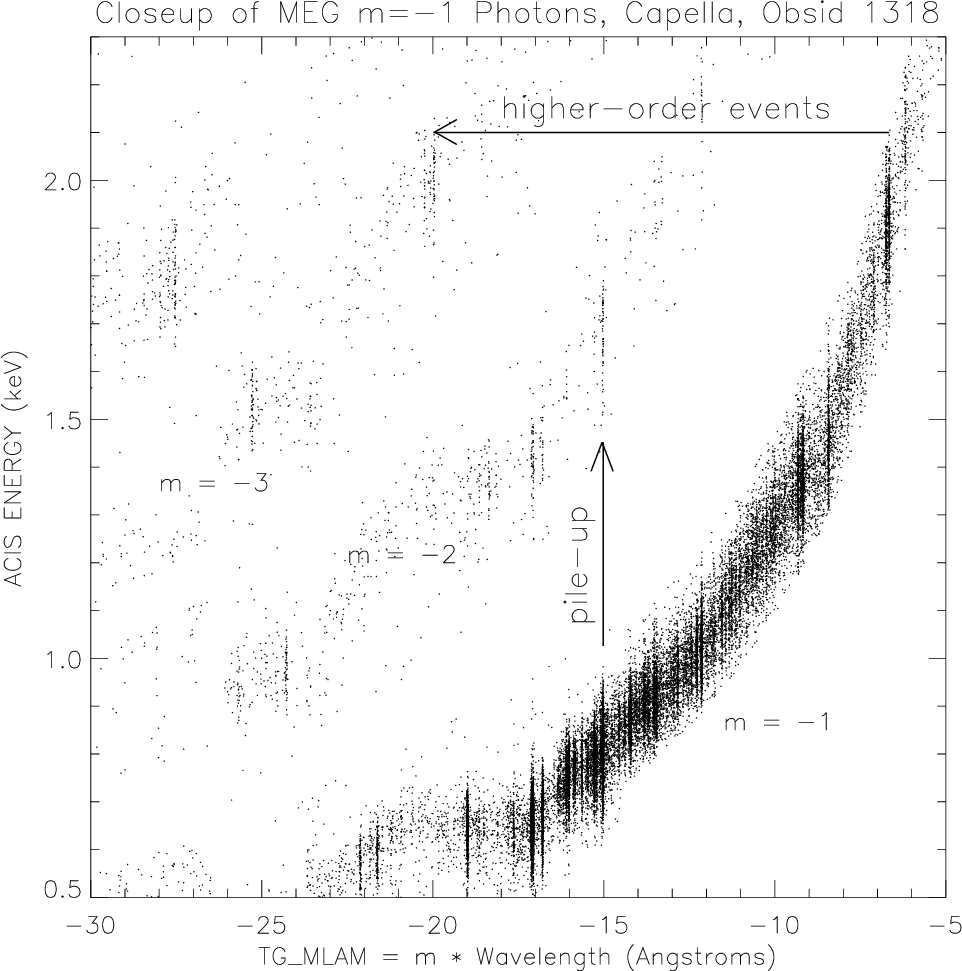
ACIS-S Pileup Effects
Figure 8.15 shows a closeup of the "banana
plot" (ACIS-determined energy versus the dispersion distance in units
of wavelength) for MEG minus-order events for an observation which
exhibits pileup (see Section 6.15) and thus mimics
higher-order photons. One can encounter pileup even in the dispersed
spectra. The effect is most likely seen in first order spectra when
observing bright continuum sources such as those found in the Galactic
bulge. Pileup, when it occurs, is most usually found in the MEG first
order spectrum near the iridium edge at 2 keV where the HETGS
effective area is the highest. Users analyzing data should note that
not correcting for pileup may introduce an artificial absorption
edge. In these cases users may well wish to examine the spectrum in
the third order to either salvage or correct a result.
Figure 8.14: HEG (upper panel) and MEG (lower panel) "Banana Plots".
A useful look at the HETGS data is obtained by plotting the
ACIS-measured event ENERGY as a function of m λ = TG_MLAM (or versus dispersion distance.) These "banana plots"
are shown here for HEG and MEG parts of the Obsid 1318 Capella
observation. The various diffraction orders show up as hyperbolae.
Events can be assigned to a diffraction order based on their location
in this space. By accurately calibrating the ACIS ENERGY and by
taking an appropriate acceptance region, events can be sorted by order
with high confidence and efficiency. A "zig-zag" in the m=−1
events pattern is visible around −10 Å in the HEG plot and is
due to uncorrected serial charge transfer inefficiency in the BI device S1, which produces a slow variation of gain across a node.
Figure 8.15: HETGS pile-up
and higher-order events. Taking a close look at the MEG "banana
plot" demonstrates how the ACIS ENERGY can be used to identify
higher-order events and pileup in an HETGS spectrum. The 3rd order
of the ≈ 6.7 Å lines are clearly visible; the lines are only
weakly present in 2nd order because the MEG 2nd order is suppressed.
In comparison, the 15 Å line (and others) are so bright in 1st order
that a fraction of the events ( ≈ 6 % here) pile-up and
produce events with twice the ACIS ENERGY. Note that the 6.7 Å lines are better resolved in the high order spectrum.
ACIS-S BI / FI QE Effects
The ACIS-S array is made up of both back-illuminated (BI) and
front-illuminated (FI) CCDs; chips S1 and S3 (see Figure
8.1) are BI devices and the rest are FI devices. These devices have different quantum efficiencies (QE) with
the BI having greater sensitivity at lower energies; most notably
the S1 BI device gives an increased effective area in the MEG minus
first order between about 0.5 to 0.8 keV. The grating ARFs are
created taking these QE differences into account.
ACIS-S Chip Gap Effects
The nominal ACIS-S aim point is on chip S3, about 2.0′ from
the gap between chips S2 and S3. Energies of gap edges in both
dispersed spectra for the default aim point and for 3 offsets in both
(+/-) Y directions are given in Table 8.2. For example, with zeroth order at the
-0.66 arc minute Y-offset position, the gap between chips S1 and S2
spans the energy range 0.808-0.821 keV in the MEG spectrum (lower
energies on S1). The observer is advised to try to avoid placing known
features of interest within three gap widths of the tabulated gap
edges. All HETGS observations are nominally dithered with an amplitude of
±8 arc seconds. There will be reduced coverage in the spectral
regions within one gap-width on either side of the gaps. The
web-based Spectrum
Visualization Tool
http://cxc.harvard.edu/cgi-gen/LETG/alp.cgi
displays where spectral features fall on the ACIS-S detector as a function of Y-offset and source redshift.The values in the table are based on an effective gap size of 0.502 mm,
corresponding to 10′′ on the sky. It is "effective"
in the sense that the gap includes columns 1 and 1024 of the devices
from which no events are reported. This value for gap size is
approximate and accurate to about 2 pixels. The actual gap sizes vary
slightly; more accurate values of the ACIS-S chip geometry are given
in a CXCDS CALDB file `telD1999-07-23geomN006.fits' (and higher versions) and
incorporated in MARX version 3.0 and higher. Relative to S3, where
zeroth order is normally placed, the ACIS-S chip locations are
calibrated to better than 0.2 pixels allowing accurate relative
wavelengths.
Table 8.2: Table of HETGS Gap Locations
| Y Offset | Grating | HETGS Gaps (keV) |
| arc min. | mm | | S0 | S0-S1 | S1-S2 | S2-S3 | S3-S4 | S4-S5 | S5 |
| 1.00 | 2.93 | MEG | | 0.505 | 0.959 | 9.611 | 1.198 | 0.564 | 0.369 |
| | | 0.345 | 0.510 | 0.977 | 11.736 | 1.172 | 0.558 | |
| | HEG | | 1.009 | 1.917 | 19.209 | 2.395 | 1.127 | 0.737 |
| | | 0.689 | 1.018 | 1.952 | 23.455 | 2.342 | 1.115 | |
| 0.50 | 1.46 | MEG | | 0.491 | 0.911 | 6.290 | 1.283 | 0.582 | 0.376 |
| | | 0.338 | 0.496 | 0.927 | 7.135 | 1.252 | 0.576 | |
| | HEG | | 0.982 | 1.821 | 12.570 | 2.564 | 1.163 | 0.752 |
| | | 0.676 | 0.991 | 1.853 | 14.260 | 2.503 | 1.151 | |
|
| 0.15 | 0.44 | MEG | | 0.482 | 0.880 | 5.064 | 1.349 | 0.595 | 0.382 |
| | | 0.334 | 0.486 | 0.895 | 5.598 | 1.316 | 0.589 | |
| | HEG | | 0.963 | 1.759 | 10.122 | 2.697 | 1.190 | 0.763 |
| | | 0.667 | 0.972 | 1.789 | 11.189 | 2.630 | 1.177 | |
|
| -0.33 | -0.97 | MEG | | 0.470 | 0.841 | 3.997 | 1.453 | 0.615 | 0.390 |
| | | 0.328 | 0.474 | 0.855 | 4.322 | 1.414 | 0.608 | |
| | HEG | | 0.939 | 1.681 | 7.988 | 2.903 | 1.228 | 0.779 |
| | | 0.656 | 0.948 | 1.708 | 8.638 | 2.826 | 1.214 | |
| -0.66 | -1.93 | MEG | | 0.462 | 0.816 | 3.491 | 1.534 | 0.629 | 0.395 |
| | | 0.324 | 0.466 | 0.829 | 3.736 | 1.490 | 0.621 | |
| | HEG | | 0.924 | 1.631 | 6.977 | 3.065 | 1.256 | 0.790 |
| | | 0.648 | 0.932 | 1.657 | 7.467 | 2.979 | 1.242 | |
| -1.00 | -2.93 | MEG | | 0.454 | 0.792 | 3.088 | 1.627 | 0.644 | 0.401 |
| | | 0.320 | 0.458 | 0.804 | 3.279 | 1.578 | 0.636 | |
| | HEG | | 0.908 | 1.583 | 6.172 | 3.251 | 1.287 | 0.802 |
| | | 0.640 | 0.916 | 1.607 | 6.553 | 3.155 | 1.271 | |
8.2.2 HETGS Line Response Function
A high-resolution spectrum is created by the projection
of events along the dispersion axis and binning the events into energy
or wavelength bins as shown in Figure 8.2. The
HETGS line response function (LRF) at a given wavelength is the
underlying distribution which would result if the source were
monochromatic at that wavelength. The LRF function is encoded in the grating RMF files. Examples from flight data are shown in
Figures 8.16 and 8.17. To a good
first approximation the core of the LRF can be modeled as a Gaussian,
parameterized by a
Resolution
, ∆E or ∆λ, given as the full-width at
half-maximum of the Gaussian, 2.35σ. For the HETG the
resolution is roughly constant when expressed as a wavelength. The
Resolving Power
, E/∆E = λ/∆λ, is a useful dimensionless measure of the
spectrometer performance. Plots of the
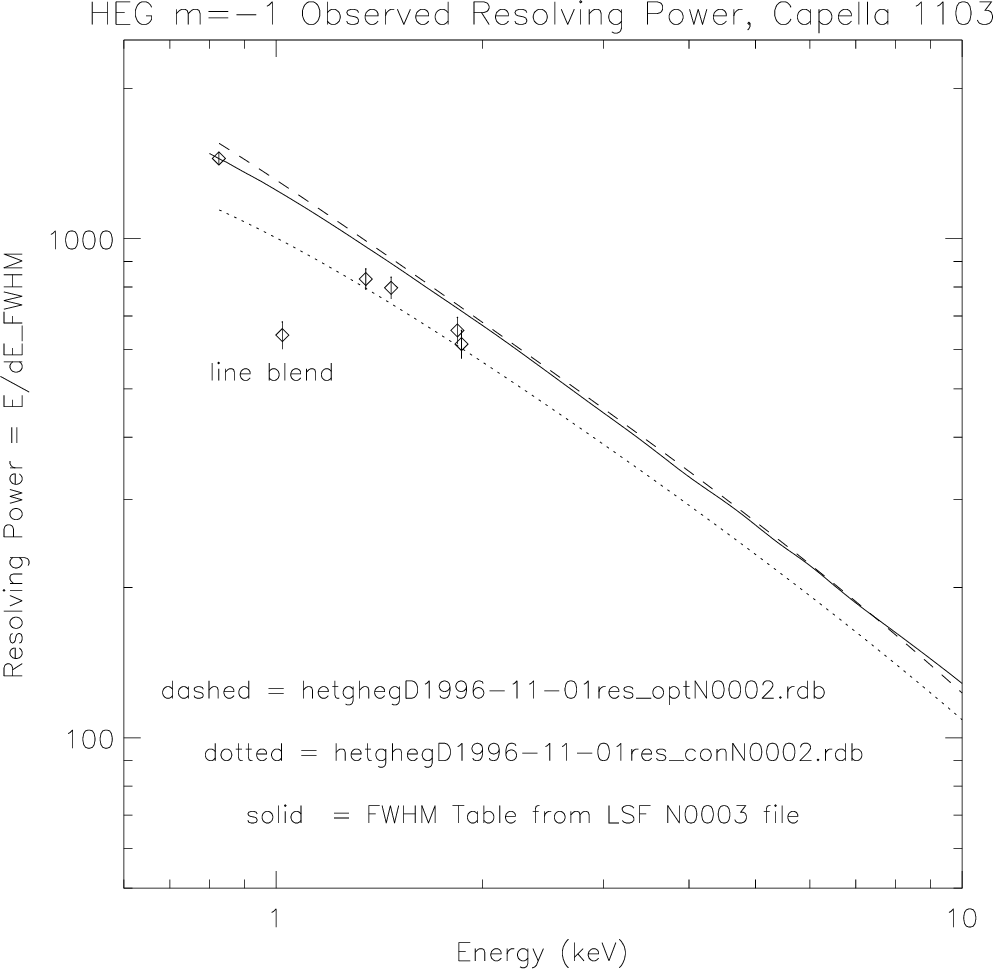
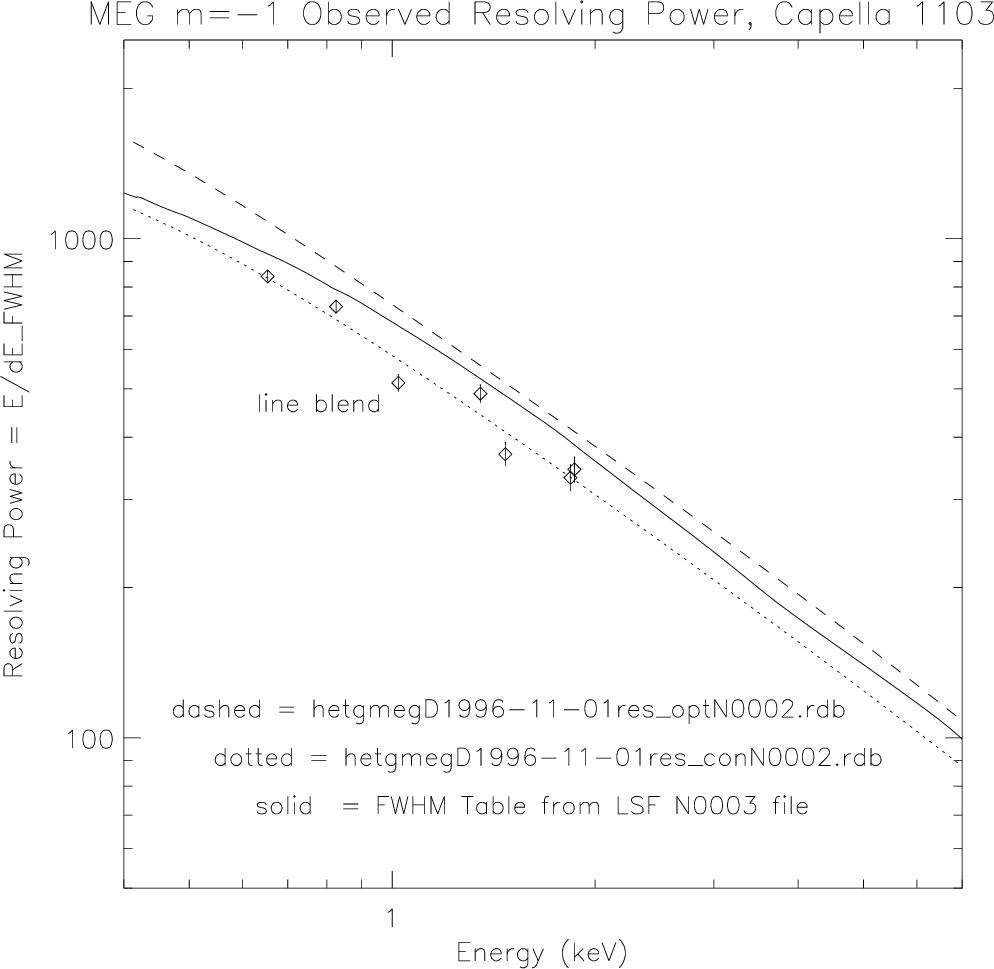
HETGS resolving power are presented in Figure 8.19.Of course the HETGS LRF is not simply a Gaussian and, as for other
spectrometers, the response can be encoded at a higher level of
fidelity through the use of response matrix files, RMF's. As
explained below, the LRF (RMF) of the HETGS depends on all system
components as well as the source spatial properties. Thus, LRF
creation is carried out using a system model, e.g., the MARX ray trace software. A set of RMF's for a point source and
nominal telescope properties can be created based on the latest LRF
library in the Chandra CALDB which includes two
Gaussian and two Lorentzian components to describe the LRF as derived
from realistic MARX simulations; for examples, see the fitted LRF
models in Figures 8.16 and 8.17.
Note that "canned" grating RMFs are provided for observation planning
but should not be used to analyze real data. They can be found at:
http://cxc.harvard.edu/caldb/prop_plan/index.html
The line response function can be decoupled approximately into three
contributing components: the telescope PSF, the HETG effects in the
dispersion direction, and HETG effects in the cross-dispersion
direction. These are described below. With the exception of "HEG scatter", all effects described here are included in MARX version
3.0 (and higher) ray trace software.
LRF: Telescope PSF and Zeroth Order
The HETG itself does not focus the X-rays emerging from the HRMA.
Rather, the Rowland design attempts to maintain the focal
properties of the HRMA in the dispersion direction even as the focus
is deflected by the diffraction angle β. The 1-D projection of
the telescope PSF onto the dispersion axis is thus at the heart of the
HETGS LRF and can be thought of as the "zeroth-order LRF".
Ground testing showed no measurable effect on the telescope PSF due to
the HETG insertion; this was used to good advantage for the now famous
image of the Crab Nebula and its pulsar, Obsid 168, where the jet and
swirling structure are seen in the zeroth-order HETGS image. Thus,
the zeroth-order image in an HETGS observation can be used to
determine the telescope contribution to the LRF.Image quality depends on many factors, and so, while a nominal LRF can
be modeled, the detailed LRF will be observation dependent at some
level. Factors in the telescope PSF performance include: source size
and spectrum, HRMA properties, focus setting, detector effects
(e.g., pixel quantization), aspect solution and reconstruction
effects, and data analysis operations (e.g., pixel randomization.)
While all of these effects can be modeled, the "proof of the
pudding" is in the as-observed zeroth order image.
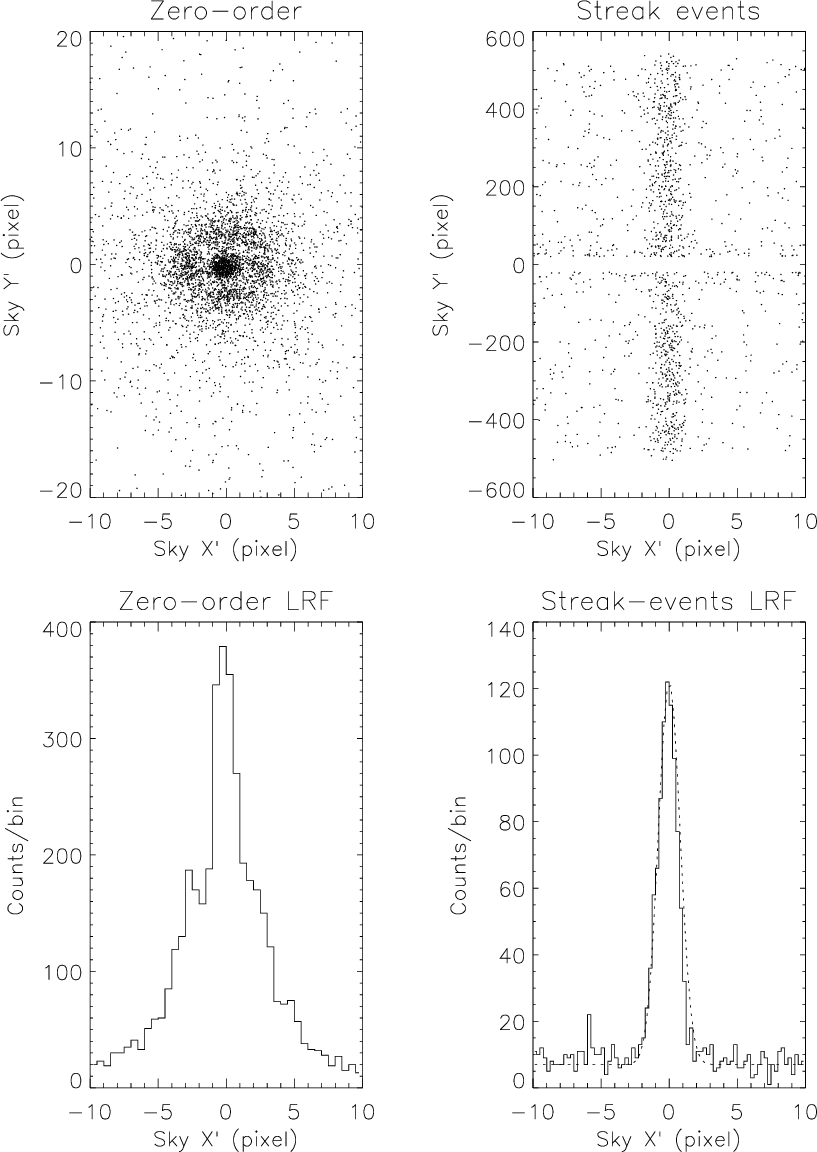
As an example, we show the results of the observation of Capella
(Obsid 1318, Figure 8.1) in
Figure 8.18. Both the zeroth-order event
distribution and its 1-D projection indicate that the zeroth-order is
heavily piled up with an unpiled event rate of order 10 events per
frame time (per few square ACIS pixels). The wings of the PSF are
visible but the core shape and intensity have been severely distorted.
However, because the ACIS-S CCDs have their columns perpendicular
to the (average) dispersion axis, the "frame-transfer streak" events
or "trailed image" (see Section 6.12.1 in
Chapter 6) can be used to create an accurate zeroth
order LRF that is not affected by pileup, as shown. For point-sources
such as Capella, measurements of the FWHM of the zeroth-order streak
events for selected observations over the first two years of HETGS operation show FWHM values generally in the range 1.46 to 1.67 ACIS pixels with an average of 1.57 ACIS pixels. Thus, by appropriately
examining the zeroth-order image and its LRF, one can get a good idea
of the expected width of a truly monochromatic spectral line, and
determine whether or not any broadening seen in a dispersed order is a
spectral property of the X-ray source.
LRF: Dispersion Direction
As mentioned, the profile in the dispersion direction defines the
instrument spectral
resolution
, ∆E or ∆λ. The resolution function
has two main terms with different dependences on energy: the image
blur from the mirror described above and that caused by grating period
variations which come in through the dispersion relation and are
described here.From the grating equation, m ∆λ = p ∆βcos β+ ∆p sin β ≈ y ∆p/Rs + p ∆y / Rs , where p is the grating period, β is the
dispersion angle, y is the dispersion distance and Rs is
the (fixed) Rowland spacing
. The two
terms of interest are on the right side of λ/ ∆λ = (∆p / p + ∆y / y)−1. The grating fabrication process
produced tightly distributed grating periods (∆p / p < 2.5×10⁻⁴) so that the first term is important in the spectral
resolution only at very high dispersion (low energy). The mirror
point response function has a nearly constant size ∆y and
dominates the resolution over most of the HETGS band, as shown in
Figure 8.19. At very low energies there is a
contribution from variation in the grating periods. These variations
are taken into account in the MARX simulator.
During ground testing, we discovered that there is a low level of
incoherent dispersion (or "scattering") in HEG spectra. This
scattering effect distributes a small amount of the flux along the
dispersion direction. The total power involved is only 1.0% of the
total in first order but the light is irregularly distributed between
the coherently dispersed orders. Assuming that the power distribution
scales with the first order dispersion distance, there is no more than
0.02% of the first order flux in any bin of width 0.01 λ.
There has been no scattering detected in the MEG spectra to a level of
order 100 times fainter than in the HEG. See the HETG Ground
Calibration Report listed at the end of this chapter for further
details. The effects of scattering from the grating are likely to be
negligible for most observations.
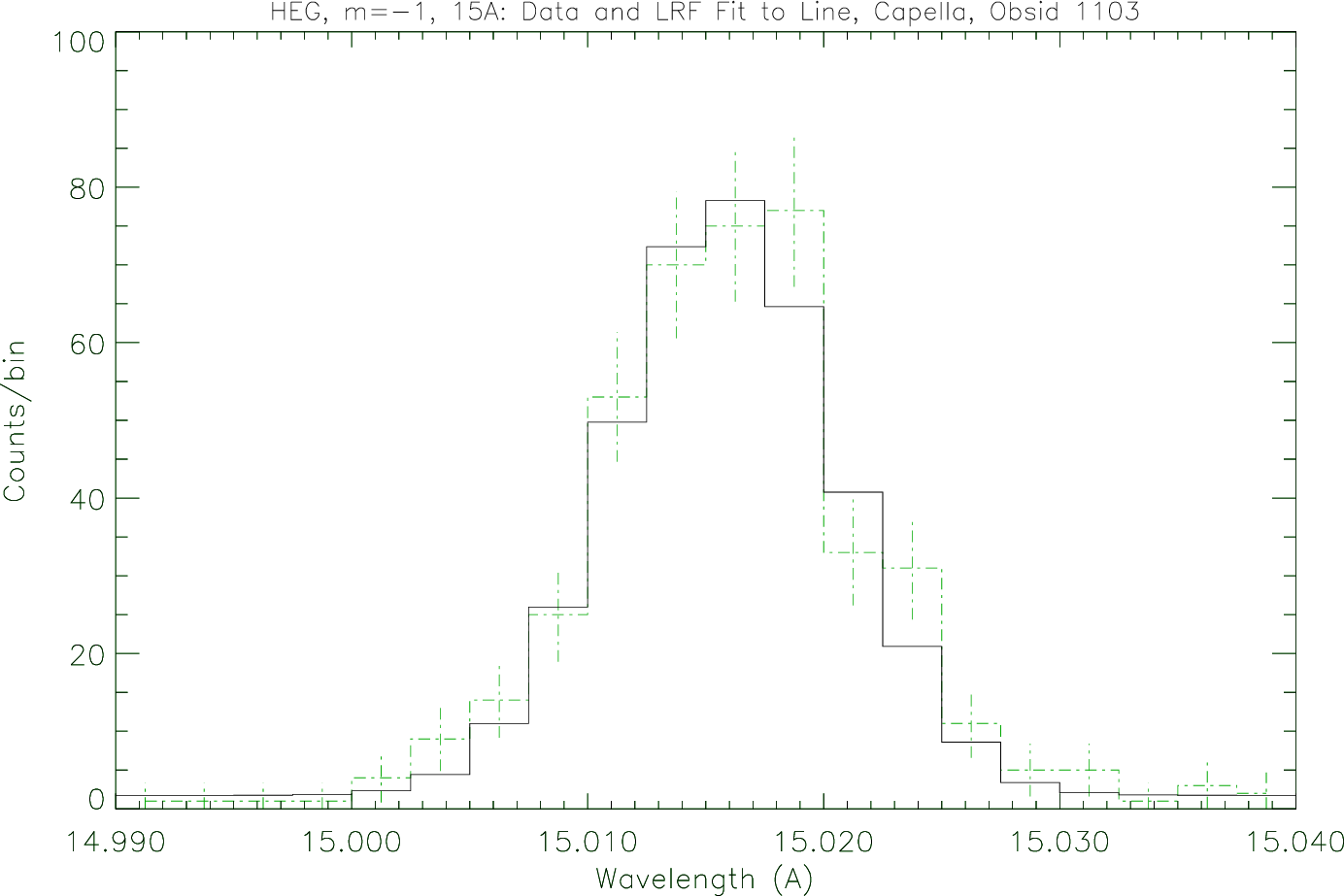
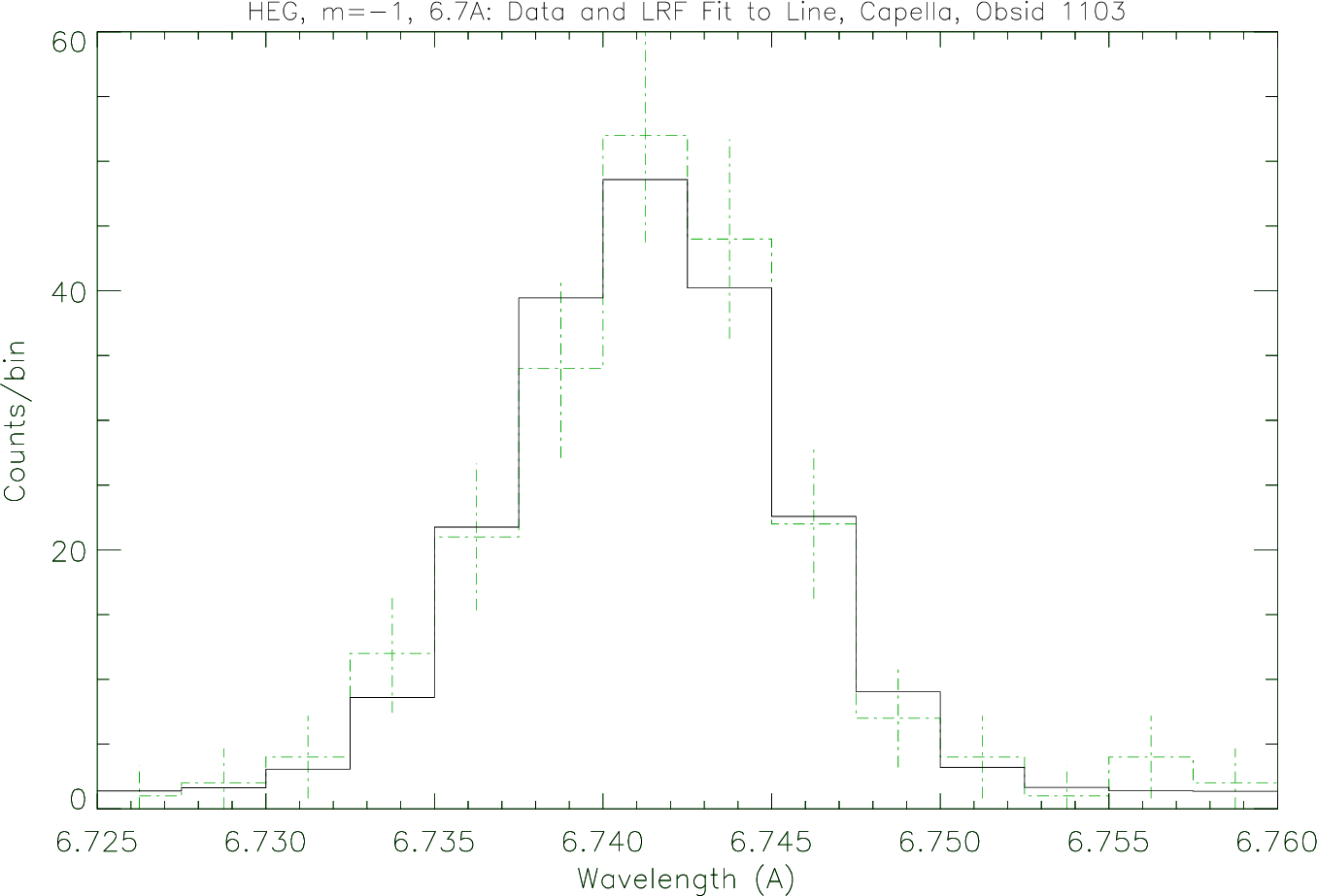
Figure 8.16: Representative Line Response
Functions at two wavelengths for the HEG; 15 Å top, 6.7 Å bottom.
Two of the bright lines in the HEG counterpart to the MEG Capella
spectrum shown in Figure 8.2 have been fit by the
instrumental LRF. The LRF is encoded in the HEG RMF created using
CXC software and calibration parameters.
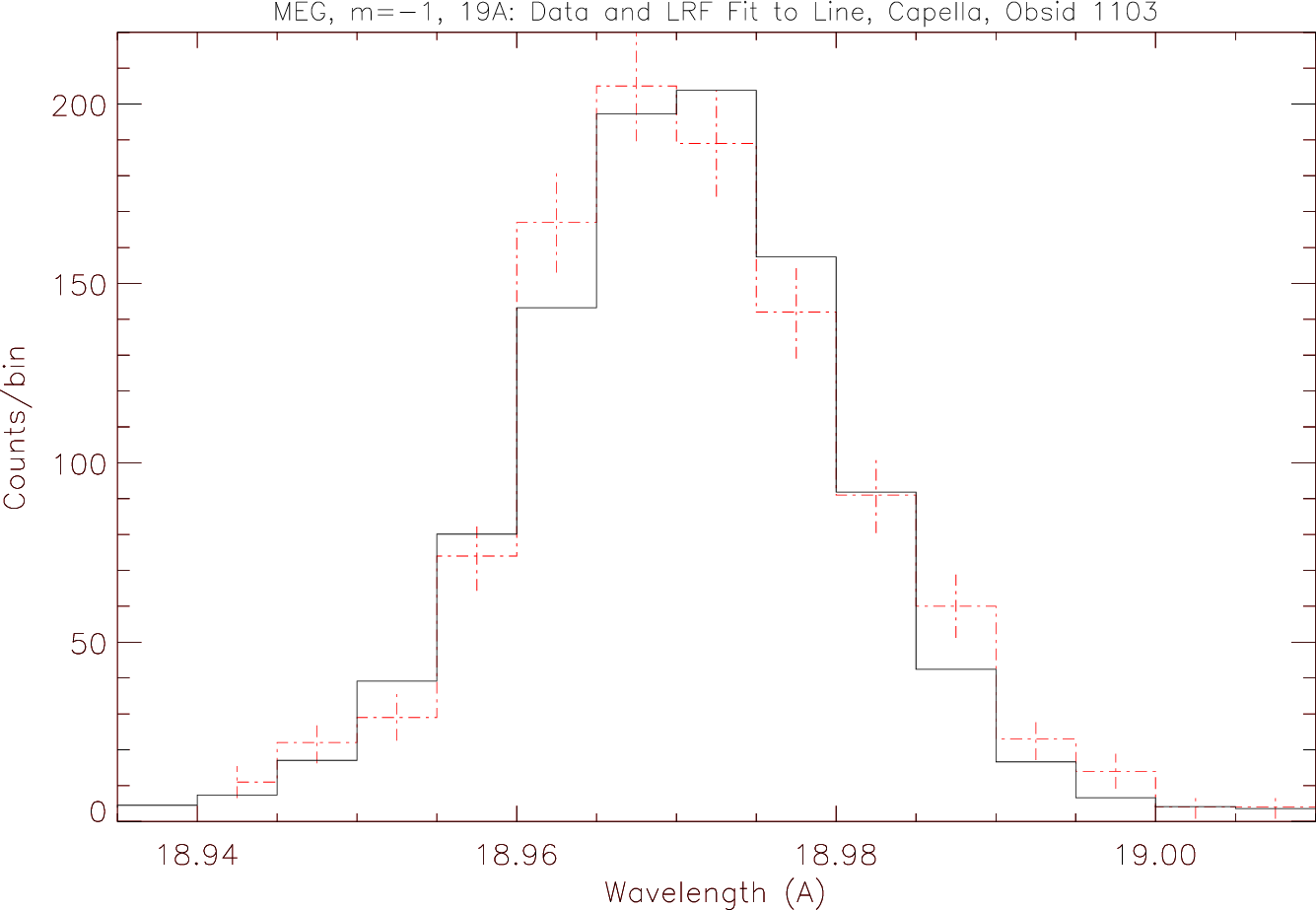
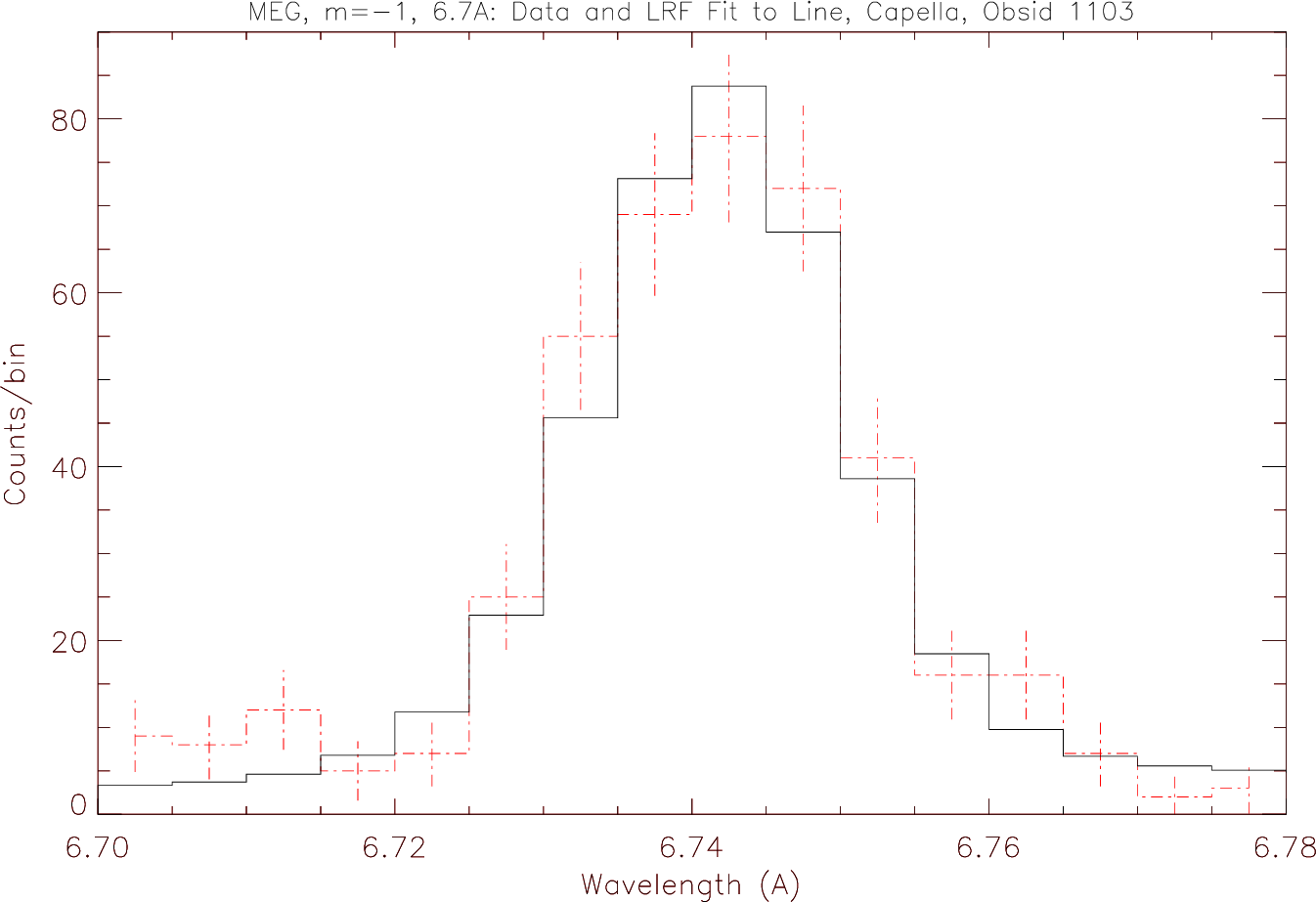
Figure 8.17: Representative Line Response
Functions at two wavelengths for the MEG; 19 Å top, 6.7 Å bottom.
Two of the bright lines in the MEG Capella spectrum shown in
Figure 8.2 have been fit by the instrumental LRF.
The LRF is encoded in the MEG RMF created using CXC software and
calibration parameters.
Figure 8.18: HETGS zero order and Frame transfer Streak (trailed image)
for Obsid 1318 of Capella. The sky coordinates, X,Y, have been
rotated so that the frame-transfer streak is along the Y′
axis, hence Y′ is parallel to the CCD detector Y axis (
CHIPY) and X′ is approximately along the average HEG-MEG dispersion axis. The left-side panels show the detected zero-order
events and their 1-D projection; pileup is evident by the enhanced
wings relative to the suppressed PSF core. The right-side panels show
the frame-transfer streak events and their 1-D projection; the dotted
line is a Gaussian fit to the data.
Figure 8.19: HEG and MEG resolving power
(E/∆E or λ/∆λ) as a function of energy
for the nominal HETGS configuration. The resolving power at high
energies is dominated by the telescope PSF; at low energies grating
effects enter but do not dominate. The "optimistic" dashed curve is
calculated from pre-flight models and parameter values. The
"conservative" dotted curve is the same except for using plausibly
degraded values of aspect, focus, and grating period uniformity. The
cutoff at low-energy is determined by the length of the ACIS-S array.
Measurements from the HEG and MEG m=−1 spectra, e.g.,
Figure 8.2, are typical of flight performance and
are shown here by the diamond symbols. The values plotted are the
as-measured values and therefore include any natural line width in the
lines; for example, the "line" around 12.2 Å is a blend of Fe and
Ne lines. The solid line gives the resolving power encoded in the RMF
s generated using the current CALDB.
LRF: Cross-Dispersion Direction
The profile in the cross-dispersion direction is dominated by three
effects: mirror blur, grating roll variations, and astigmatism (as a
by-product of the Rowland design which optimizes spectral resolution).
The cross-dispersion profile that results from astigmatism is slightly
edge brightened, but quasi-uniform, with a length at the Rowland focus
of 2Rfy2/Rs2, where y is the dispersion length and Rf is
the radius of the ring of facets on the HETGS structure and
dominates the size of the cross dispersion profile at large dispersion.The spread of facet roll angles (defining the dispersion direction for
each facet, and not to be confused with the spacecraft roll angle),
∆φ, contributes a cross-dispersion term of order
y∆φ. Sub-assembly measurements predicted ∆φ=
0.42 arc minutes rms. However, analysis of ground test measurements
lead to a somewhat larger and more complex roll angle distribution for
the gratings. In addition, six misaligned MEG facets were
discovered during ground testing. The inferred facet roll angles were
misaligned from the average dispersion direction by 5-23 arc min. On
average, each facet contributes only 1/192 of the flux at any given
energy, so the cross dispersion profile has small deviations in the
form of peaks displaced from the main distribution.
To include explicitly the MEG misaligned gratings, MARX uses "sector" files which allow the specification of grating
alignment and period parameters for certain regions (sectors) of each
of the four shells. Using these files, the agreement between ground
calibration and flight data is very good. For the MEG the
misaligned gratings are explicitly included and the rest of the
gratings' ∆φ term is modeled as the sum of two Gaussian
distributions centered at +1 and -1 arc minute w.r.t. the nominal
axis, each with an rms value of 1.5 arc minutes. For the HEG a more
pronounced bi-gaussian distribution is observed and modeled: the
Gaussians are offset by -1.35 and +1.65 arc minutes, each with a 1 arc
minute rms, and in a relative ratio of 55:45.
In each case, these effects are accurately included in MARX version
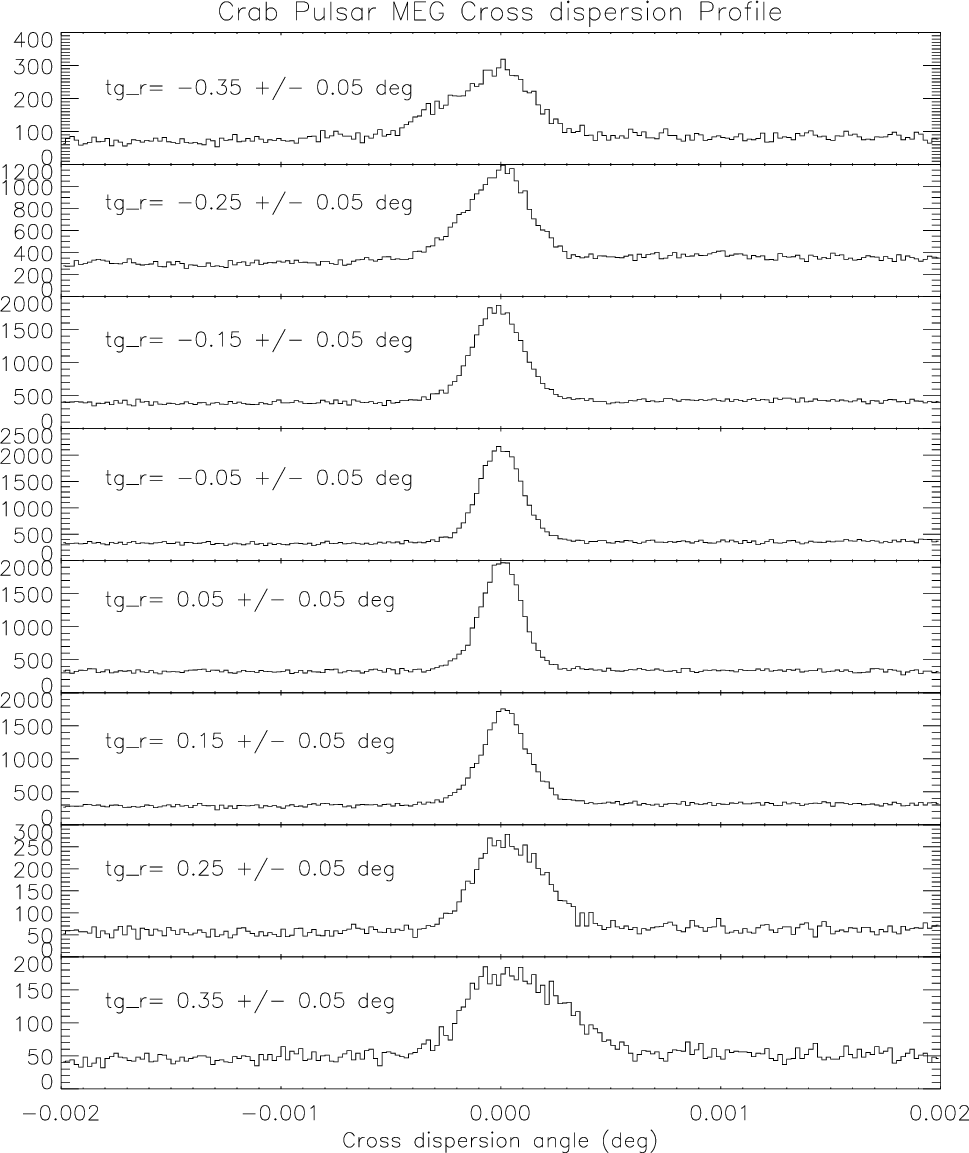
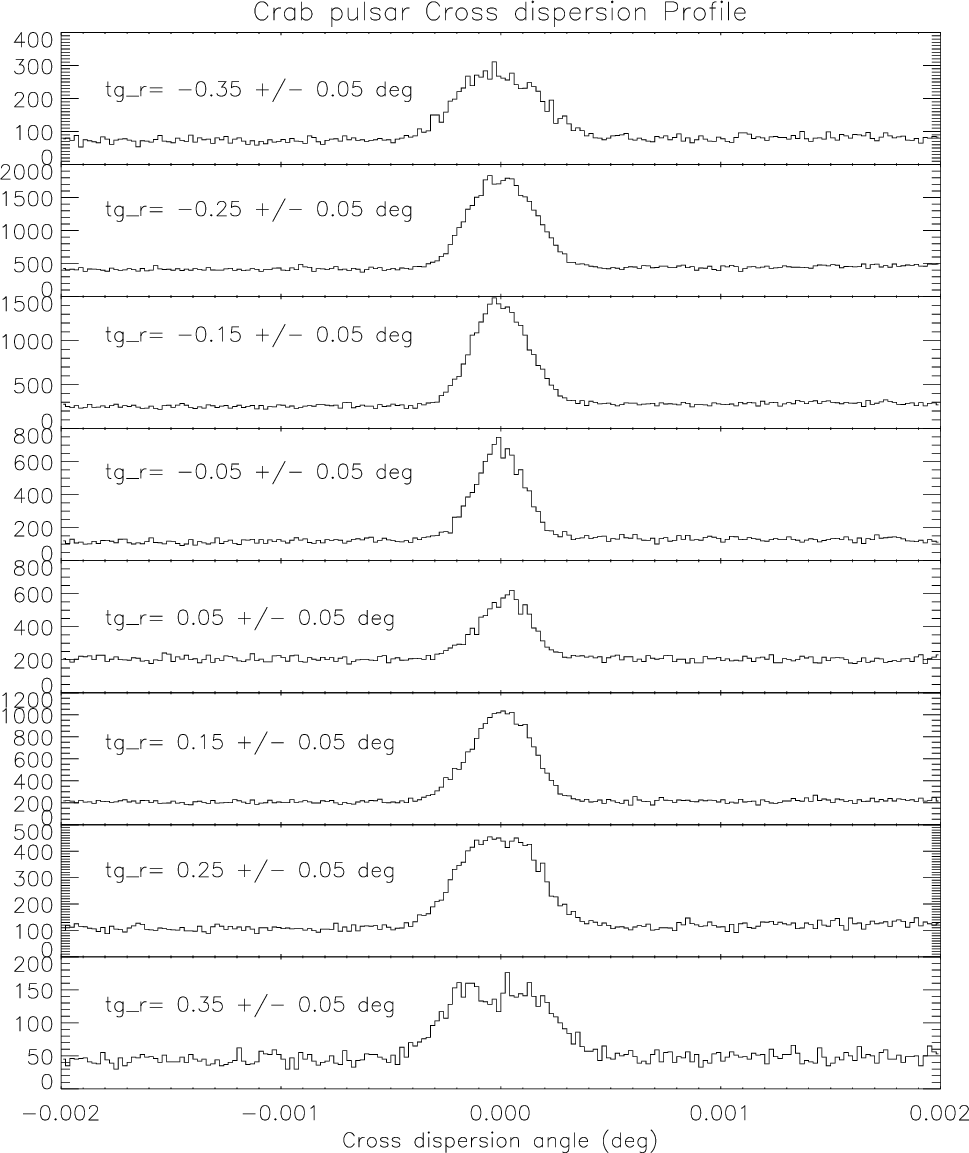
3.0 (and above). Flight data for the Crab pulsar (Obsid 168) are
shown in Figure 8.20 for the MEG and in
Figure 8.21 for the HEG. Note that these
profiles are on top of a significant baseline due to the presence of
the Nebula. The asymmetry in the MEG profile caused by misaligned
gratings is quite clear at large dispersions.
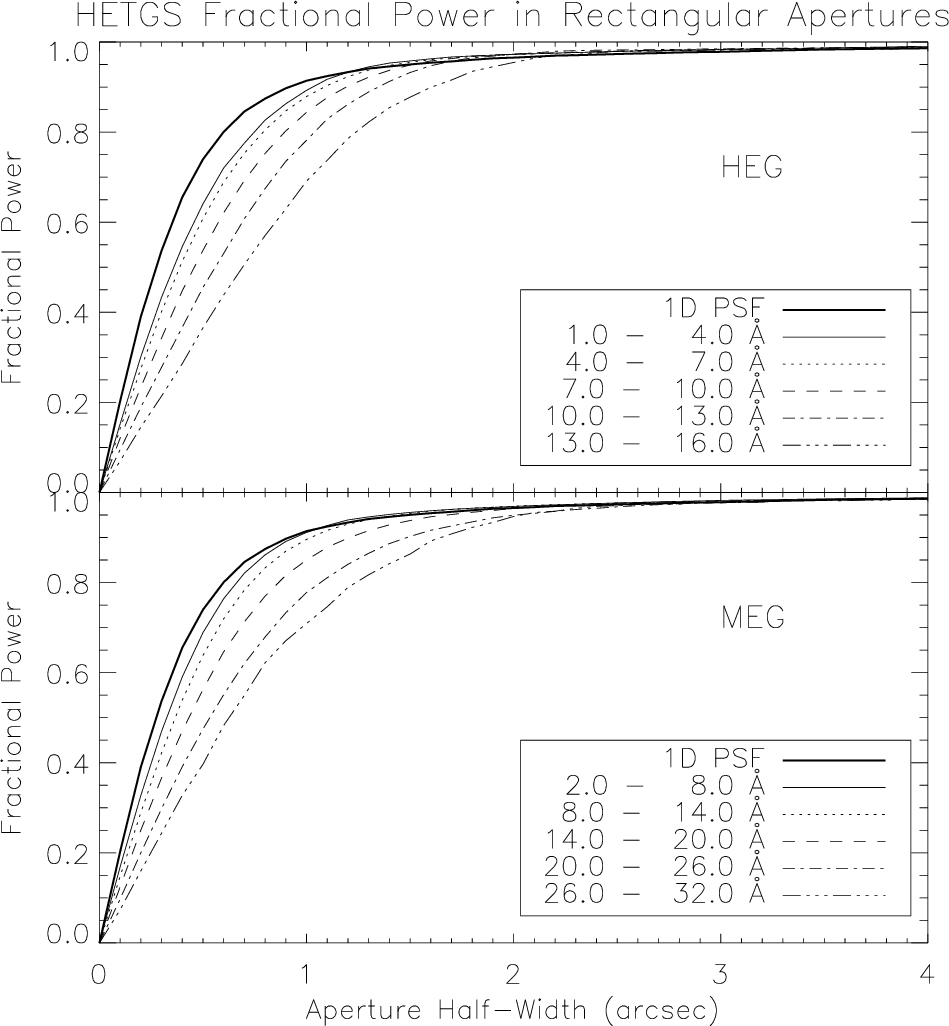
Finally, we show in Figure 8.22 how the total observed
flux depends on the width of the extraction region in the
cross-dispersion direction. The figure can be used to estimate the
reduction in flux if analysis using a narrow extraction window,
smaller than the nominal 4 arcsec full width, is planned.
Figure 8.20: The cross dispersion profile
is shown for eight slices of the dispersed MEG spectrum of the Crab
pulsar. There is an asymmetry caused by misaligned gratings that
becomes most evident at large dispersion.
Figure 8.21: As in
Figure 8.21, the cross dispersion profile is shown for
the HEG spectrum of the Crab pulsar. The profile is symmetric but
broadens significantly at large dispersion.
Figure 8.22: Enclosed power
distributions are computed for five wavelength intervals for both the
HEG (top) and the MEG (bottom). The observation of Mk 421
(observation ID 1714) was used.
Extended and Off-Axis Targets
The observation of extended sources with the HETGS adds complexity.
Chiefly, the position of an event in the focal plane is not a unique
function of the position within the source and the photon energy. The
source extent, measured by the zeroth-order image size, can
effectively increase in several ways: the telescope is out of focus,
the source is off-axis, or there is a natural extent to the
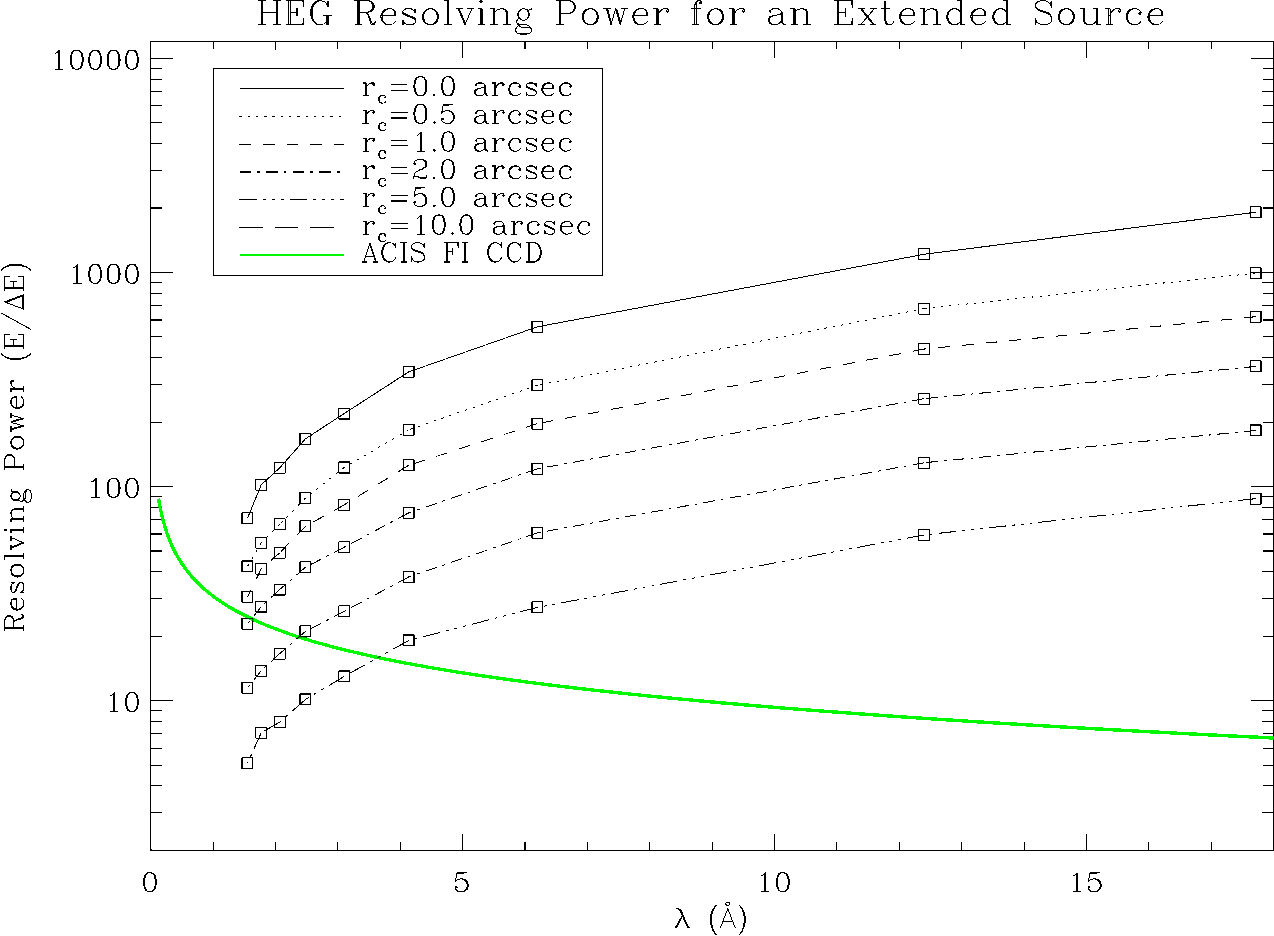
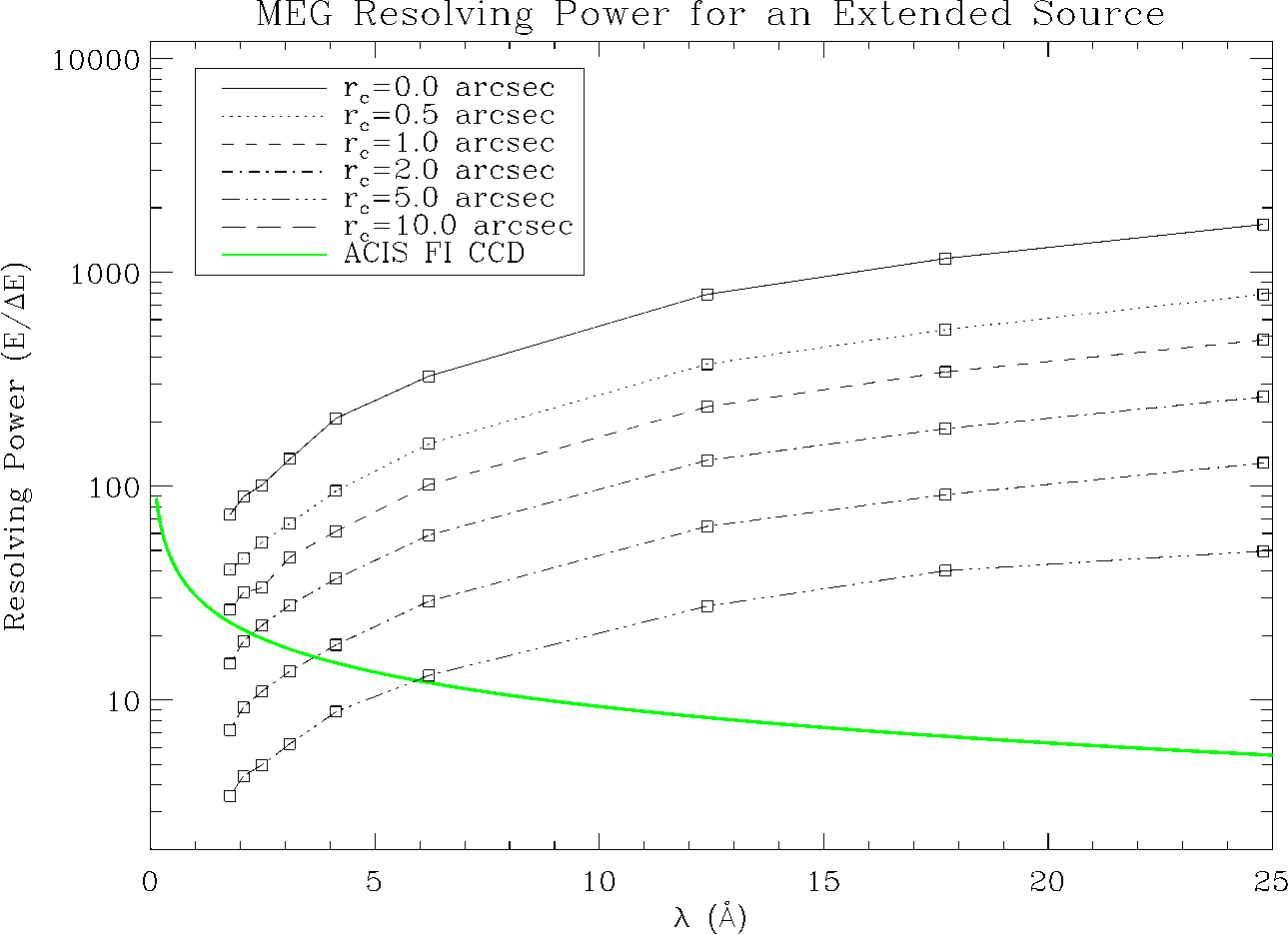
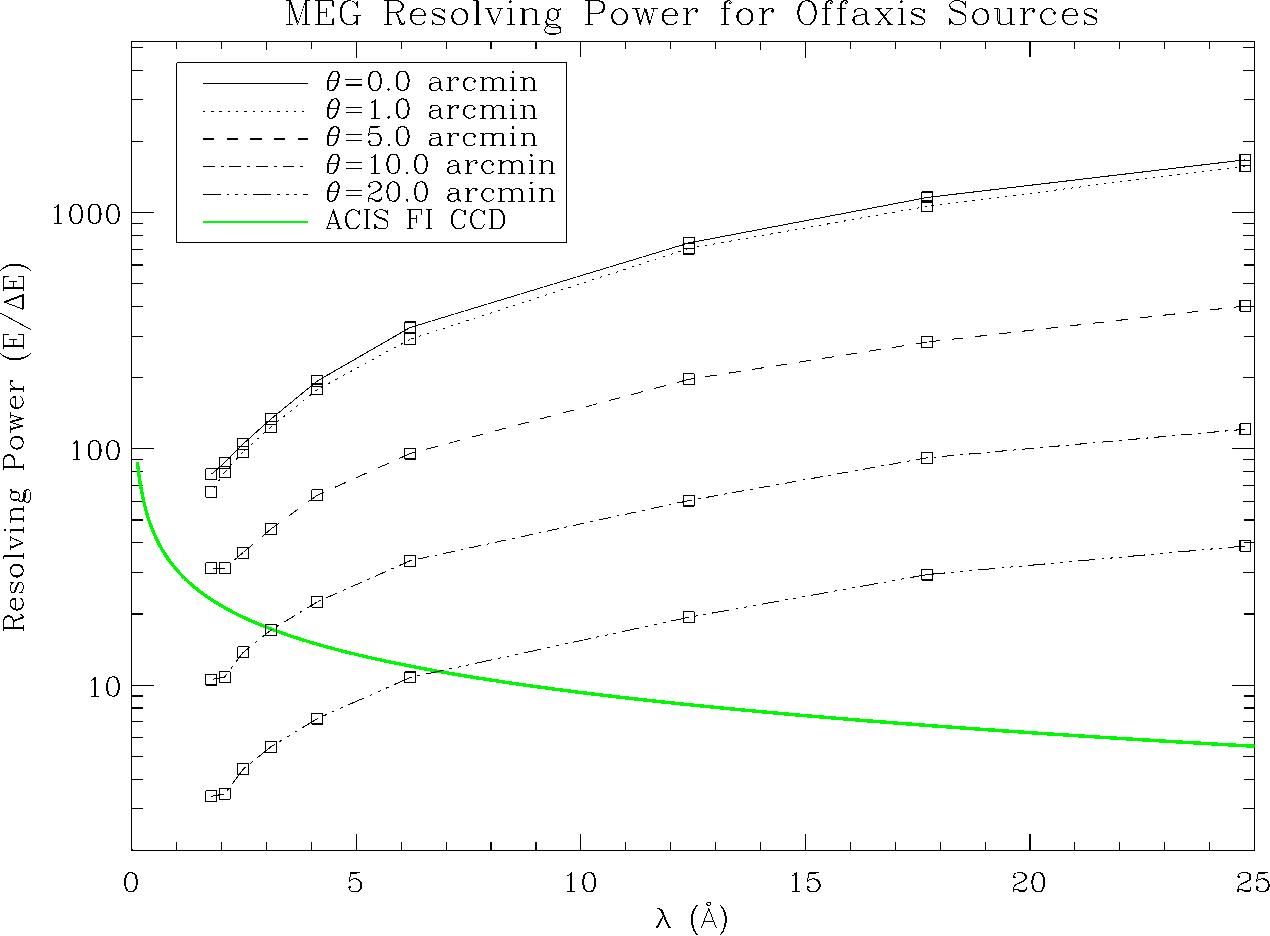
astrophysical source. Figure 8.23 illustrates the
chief consequence for extended sources - a degradation of the apparent
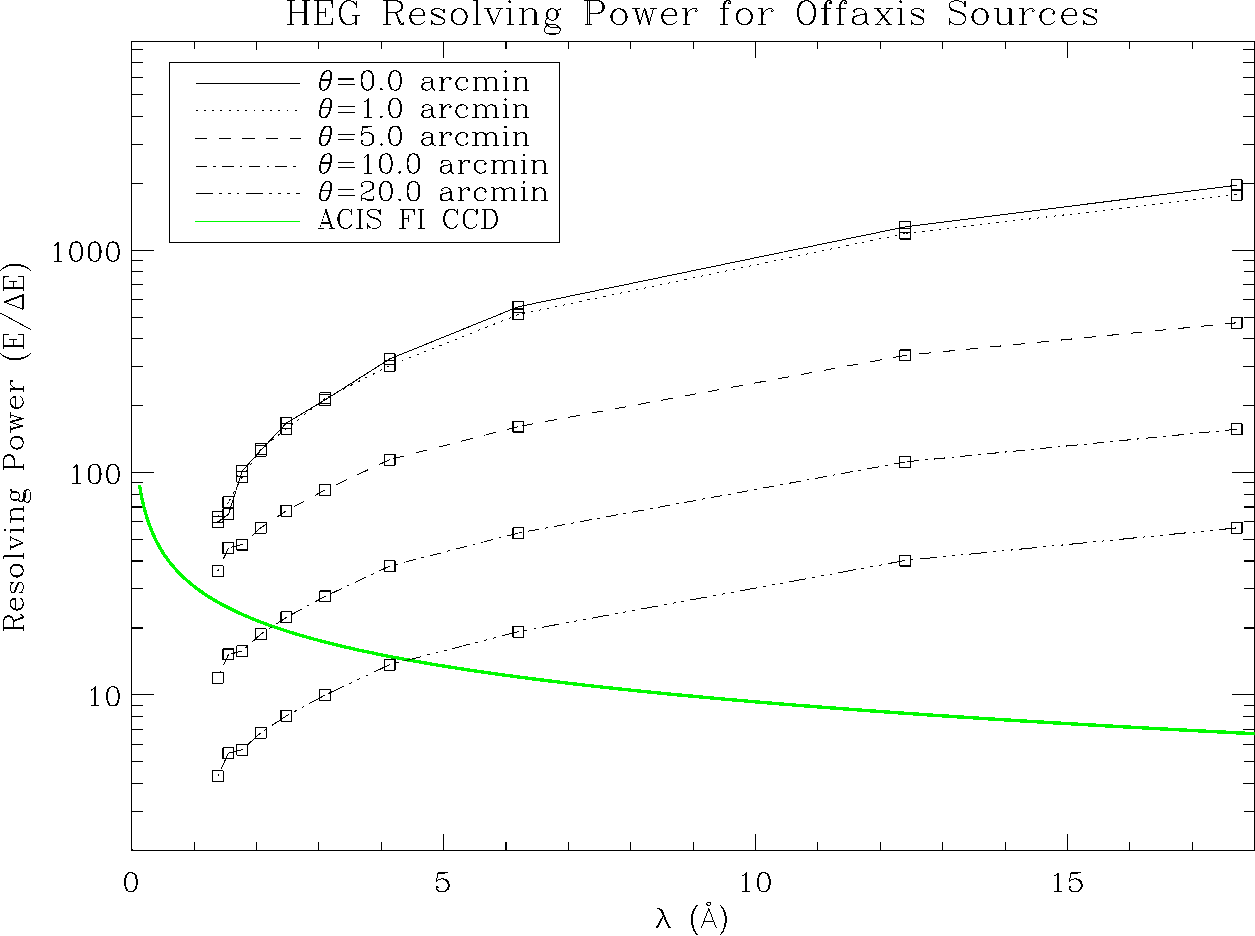
spectral resolution. In Figure 8.24 similar
resolution curves are shown as a function of the source off-axis
angle.The discussion and plots above assumed that the source has no
spatially dependent variations in the spectrum. The more general case
of extended sources with spatially varying spectra is briefly
discussed below in Section 8.5.3.
Figure 8.23: The effects
of source size on the apparent HETGS spectral resolution. This
MARX simulation uses a cluster (of galaxies) Beta model for the
surface brightness profile. The Beta model is parameterized by a core
radius (rc) which represents the extension of the source. The
effect on the apparent resolving power (E/∆E) is shown as a
function of photon energy for source sizes of
0′′,0.5′′, 1′′,2′′, 5′′, and 10′′. The
spectral resolution of an ACIS FI CCD near the framestore region
is shown for comparison.
Figure 8.24: The
effects of off-axis pointing on the HETG grating spectral
resolution. Using MARX, we have simulated an observation of a point
source at increasing off-axis positions. The effect on the resolving
power (E/∆E) is shown as a function of photon energy for
off-axis angles of 0′, 1′, 5′, 10′,
and 20′. The spectral resolution of an ACIS Front
Illuminated (FI) CCD at a point near the framestore region is
shown for comparison.
8.2.3 Background
Since the HETG is always used in conjunction with a focal-plane
detector, spectra from the HETGS will have background events
determined by the detector's intrinsic and environmental backgrounds.
The cosmic background, folded through the HETGS response, will
likewise contribute background events. In addition to these
detector-dependent backgrounds, there are additional grating-dependent
effects such as scattering from the gratings which will produce
extraneous photons in locations unexpected on the basis of the simple
grating equation. One such effect is the scattering along the
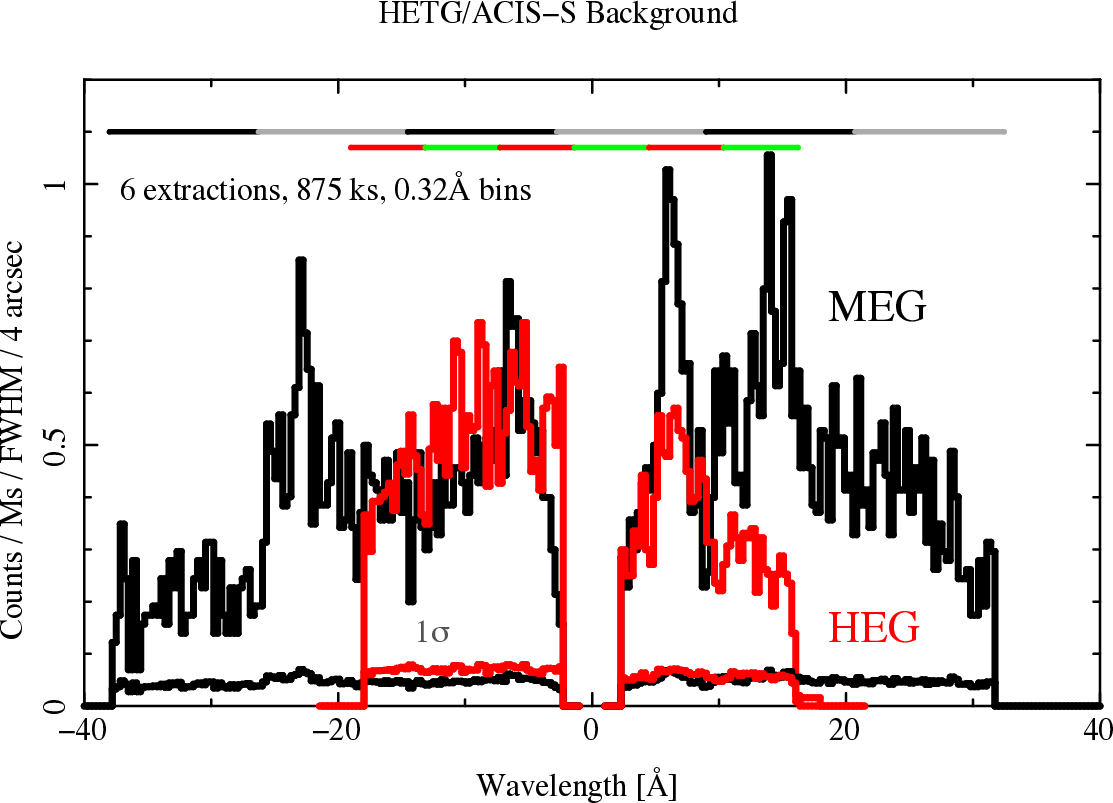
dispersion direction described in Section 8.2.2.Figure 8.25 shows the HEG and MEG spectra of the
background for a long calibration observation of HR 1099 (observation
ID 62538). The background was selected from regions 8-50 arcsec from
the dispersion line in the HEG and 11-50 arcsec from the dispersion
line in the MEG. The pulse height selection was simple, accepting
events that satisfy the relation | EACIS / ETG − 1 | < 0.30 ,
where EACIS is the energy derived from the ACIS-S pulse height
and ETG is the energy based on the dispersion distance. The
background was normalized to an aperture of ± 3 arcsec (full size
of 6 arcsec) and averaged at 0.1 A intervals. This plot can be used
to estimate the background in a dispersed spectrum at a particular
wavelength for proposal purposes.
There is considerable structure in the background. For λ < 2
Å (E > 6 keV), the background is dominated by high energy events
that are included in the relatively wide pulse height selection. This
background can be further reduced in data analysis because the pulse
height selection can be somewhat narrower at high energies. As one
would expect (see Section 6.16), the background is
higher in the region near 8 Å in -1 order as this portion of the
dispersed spectrum is detected with a BI chip (S1). "Streaks",
short-lived events observed in the S4 detector, have been removed;
otherwise, the background in +1 order would be significantly higher
and would show more structure.
Figure 8.25: The background spectrum is plotted
for the HEG (top) and MEG (bottom) for a long observation of the
late-type star HR 1099 (observation ID 62538). The background was
normalized to a 6 arcsec wide aperture but determined from a
substantially larger region out to 50 arcsec from the source
dispersion line. The spectrum was binned to 0.1 Å to show details
of structure that may be observed in a typical HETGS observation.
The spikes near zeroth order are due to increased background included
in the pulse height selection at high energies.
8.2.4 Absolute Wavelength
The HETGS-measured wavelength depends, as the grating equation
implies, on knowing the diffraction angle, the diffraction order, and
the grating average period. The angle depends on knowing the HETGS geometry, specifically the Rowland spacing and the ACIS-S pixel size
and configuration. Preliminary comparisons between measured and
expected emission line wavelengths indicates an agreement to the
accuracies listed in Table 8.1. Systematic
wavelength errors are now at the 100 km/s level.
8.3 Calibration Status
The calibration of the HETGS is based on extensive laboratory tests,
system-level ground measurements, and flight data and
analyses. Because the HETGS involves the HRMA, HETG, and ACIS-S as well as aspect system properties, calibration of all these
components is important to the HETGS calibration. Details of the
present state of the HETGS calibration are available at
http://space.mit.edu/ASC/calib/hetgcal.html;
see also Marshall et al. (2004), Weisskopf et al. (2004), and Marshall (2012).
8.4 HETG Operations
8.4.1 Flight Events and Anomalies
There have been no flight anomalies with the HETG per se. There have
been some problems with the HETG and LETG grating insertion/retraction
mechanisms. To date these have been limited to failure of some of the
limit switches which are used to sense the gratings' position. In May
2000 there was failure of the HETG A-side electronics retraction limit
switch indicating that the HETG was not retracted, when in fact it
was. Switching to the redundant B-side limit switch worked until June
2000 when it too would not indicate that the HETG was retracted.
Subsequently operational procedures have been changed in order to
determine when the gratings are properly retracted. There have been no
impacts to the science program.Because the HETG insert limit switches continue to function and
because the HETG is inserted against a hard stop, these anomalies
have had no effect on the HETG wavelength scale.
8.4.2 Operational Constraints
With the exception of operational constraints on the focal plane detectors, there are no operational constraints for the use of the HETGS from the
proposer's point of view. The HETG is placed in the stowed position
during passage through the radiation belts, a time when no data can be
taken. Additional functional constraints include preventing both the
HETG and LETG from being simultaneously commanded into position, which
could cause a mechanical interference. Finally, a "failsafe" command,
once used, will permanently retract the grating. A decision to issue
the failsafe command will not be taken without a thorough review
including the Chandra Project and NASA Headquarters.
8.4.3 Output Data
There are no data from the HETG itself. The data are generated by
the focal-plane imager in its format
(e.g. Figure 8.1).
8.4.4 Performance Monitoring, Health and Safety
The HETG itself has only a few thermal and mechanical switch sensors
associated with it. These sensors are examined routinely as part of
the health and safety monitoring of the
Observatory. HETGS performance is monitored by means of the
calibration observations (Section 8.3).
8.4.5 Thermal Response Time
There is a negligible thermal time constant for the HETG to
equilibrate from "near-wall" storage to "in-use" temperature
environments. The temperature dependence of the resolution and energy
scales have been minimized through use of low-expansion material
("Invar") and single-point-mounted facet-frames. Thus, the support
structure may expand or contract, but the facets will not.
8.4.6 Observation Frequency/Duty Cycle
Currently, the longest continuous observations are
limited to the time between passage through the radiation belts
(Section 3.4.2).
8.4.7 Radiation Considerations
The main radiation concern for the HETG concerns the polyimide
support material. Thin membranes of this material, used for
proportional counter windows operating under a pressure differential,
have been tested for the effects of radiation damage on leak rate. No
increased leak rate was encountered after a dosage of 9 krad.
In these tests the mechanical integrity of the material, the key issue
for the HETG, was severely tested by the ability of the window to
maintain the pressure differential of order one atmosphere. Loss of
mechanical integrity has been reported in the literature, but only
after exposures of 1000 MRads. The estimated proton dose to the
HETG polyimide is of order 1 kRad per orbit when the HETG is
inserted, and much lower values when HETG is in its stowed position.
Current practice is to have the HETG retracted during radiation
passages; however, even if it were left inserted the total exposure
would be ≈ 1 MRad over 10 years, well below the 1000 MRad
level.A secondary concern would be changes to the Gold grating bars (which,
when in place, face the HRMA) due to sputtering by particles,
particularly for the high-aspect ratio HEG gratings. Diffraction
order ratios are sensitive to these changes. To date, after flight
experience and laboratory radiation tests, there is no evidence that
this concern is other than intellectual.
8.5 Observation Planning
The following sections provide assorted information and topics
relevant to planning an HETGS observation. See also the HETGS
observation planning web page:
http://space.mit.edu/ASC/calib/hetg_GO_info.html
8.5.1 Focal Plane Detector Considerations
The HETG was designed for use with the ACIS-S detector, although
other detectors may be used for certain applications. Details
concerning the detectors may be found in Chapters 6
and 7. Some considerations are:
- ACIS or HRC: ACIS provides energy resolution which is
useful for order separation
, background
suppression, and discrimination between multiple sources. The HRC is likely to be useful if high time resolution is necessary
especially if the ACIS mode is not helpful for the observation in
question. The HRC has not yet been used with the HETG and no
calibration verification has yet been performed, so this detector
is not recommended for general use.
- Operating mode
of ACIS-S: The
ACIS-S array can operate in many modes, giving control over e.g.,
the read-area, pixel-binning, and read-frequency. The selection of
the appropriate operating mode and its ramifications for the
experiment is one of the most important that the user faces. A
careful reading of Chapter 6 is recommended. The
proposer should pay special attention to the pros and cons of
designating optional CCDs for their HETGS observation, as opposed to
simply requesting the entire ACIS-S chip set.
- Selecting the aimpoint: The capability of moving the SIM along the spacecraft Z-axis (the cross-dispersion direction) is
useful for placing the image (dispersed spectra and zeroth order)
closer to the ACIS chip readouts. This placement minimizes the
effects of the row-dependent energy resolution of the FI chips. For a
point source, the recommended placements, stated as offsets from the
nominal position are −3 mm and −4 mm for ACIS TE and CC modes respectively. The
recommended shift in TE mode allows space for background data to be
obtained on the readout side of the dispersed image. The CC mode,
however, integrates over the columns, and so there is no advantage
gained, and thus the the image can be placed even closer to the
readout. NB: Shifting the aimpoint may not be desirable if the target
is extended or when there are several sources in the field.
- Orientation of multiple (or extended) sources:
One may need to specify a restricted range of
spacecraft roll-angles to avoid overlapping spectra from multiple
targets in the field, or to arrange that the dispersed spectra from
particular features of an extended target do not similarly
overlap. Note that roll angle constraints usually will lead to
restrictions on the dates dates of target availability. See
Chapter 3.
- Offset pointing: Pointing offsets may be specified and used to
include or exclude nearby sources, to keep an important spectral
feature clear of the gaps between chips, to put a particular
low-energy feature on the higher efficiency BI chip S1,
etc. Offsets greater than one or two arc minutes will, however,
degrade the image quality - Chapter 4 - which in turn
broadens the LRF (Section 8.2.2).
- ACIS subarray modes: One might wish to
reduce the ACIS-S frame time e.g. in order to minimize the effects
of pileup. The user might consider using a subarray
with the HETG, as described at
http://space.mit.edu/ASC/calib/hetgsubarray.html.)
If the source is point-like, then a -3 mm SIM shift can be used. In
this case, there are at least 6 mm of ACIS-S rows that may not be
scientifically interesting (unless the user desires data from serendipitous
sources). The reduced array could have 1024 - 250 = 774 rows starting
at row 1 thus reducing the frame time to 2.5 s.
The size of the minimal
subarray depends on the low energy cut-off, E, below which the
spectra are not of interest. To understand this better, please
refer to Figure 8.1. The subarray must be large
enough to encompass both HEG and MEG "arms". Larger
subarrays are needed at lower energies where the arms are furthest
apart. The minimal subarray size is
ysub = 2*ybg + 32 + 389/E,
where E is in keV, 32 pixels allow for dither,
and ybg is the size of a background
region on either side of the spectrum. The background
region might be of order
70 pixels (about 10 times the spectrum's extraction width).
The SIM should be shifted to center the spectra in the subarray
by SIM_Z = 0.024 * (ysub/2 − 497 + 122θz) mm,
where 497 is the row of the ACIS-S aimpoint and θz is the
telescope Z offset that places the target precisely on the optical axis. For
E = 1 keV and θz = 0.25′,
then ysub = 561 rows and the SIM shift is −5.93 mm.
- Example of a set of parameters: It is instructive to examine
the obscat entry for observation ID 9703 which shows observation
parameters and values.
(See
http://cda.harvard.edu/chaser/startViewer.do?menuItem=details&obsid=9703.)
The main target is a quasar. The AGN is mildly absorbed, so there is flux of interest down to the MEG limit, hence chip S0 (where the low energy flux will fall) is designated as "yes", while S5, which is redundant with S1 and S0, is designated as "optional". A subarray is used to eliminate pile-up. The SIM has been shifted in the Z direction to place the spectrum closer to the readout and to center the spectrum in the subarray. This will minimize the
impacts of the row-dependent CTI on the FI-chips. Finally, a Y offset of 0.0 arcmin is used to keep the Fe-Kα region of the spectrum out of the S2-S3 chip gap in the HEG.
The telescope Z offset is set to bring the zeroth order closer to the current optical axis.
- Use of continuous clocking (CC) mode: this mode can be
applied in order to mitigate pileup in very bright sources.
Most high resolution features will be unaffected. However,
there are some calibration issues that have not yet been resolved:
- The Si K edge can have a distorted shape and incorrect optical depth
- A broad feature may appear at about 5.4 Å (2.3 keV)
- There can be significant charge losses below 3 Å ( > 4 keV)
- The spectrum may have the wrong shape above 10 Å ( < 1.2 keV)
For further details, see ACIS Section 6.20.4 and links therein.
8.5.2 Complications from Multiple Sources
Multiple sources in the field of view can also lead to effects which
impact the observation.
Faint Background Sources
The position of a faint second source might be such that the
zeroth-order image falls directly on the dispersion pattern from the
prime target. In this case, the zeroth-order image of the second
source appears as a line in the dispersed image of the prime
target. The ACIS energy spectrum can be used to minimize the
contribution to the measured dispersed spectrum of the target. Also,
the lack of a feature in the other side of the dispersion pattern will
indicate that the "line" is spurious.
Two Point Sources of Comparable Intensity
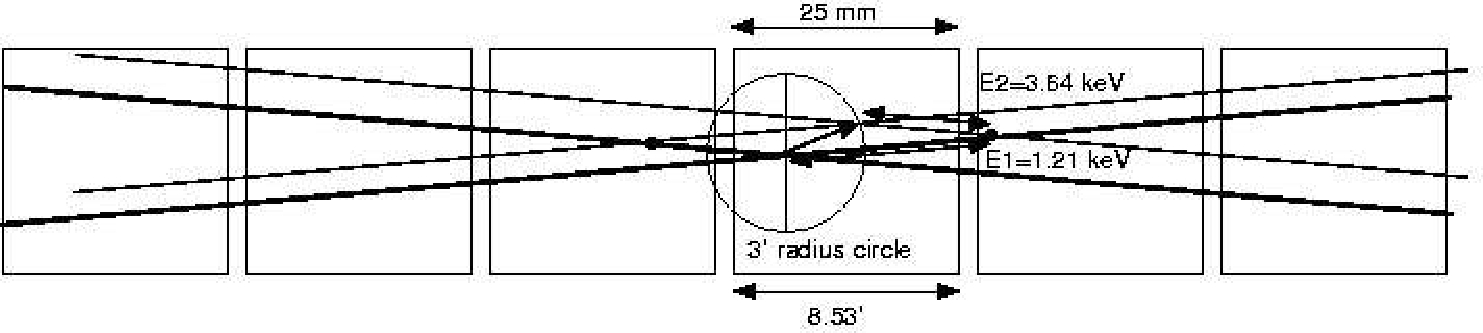
The dispersed MEG and HEG spectra of two sources will cross if the
objects are fairly close. When the two targets are less than about
3′ apart, both will be nearly in focus, so the spectra appear
like two flattened "X"s. Normally, the ACIS-S pulse heights of the
events will be significantly different in the regions of overlap, so
that one may distinguish the events from two sources in data analysis.
There are specific roll angles, however, where the identification of
the source is ambiguous; a rare occurrence, but one the user should be
aware of.
Figure 8.26: An idealized
sketch of a `collision' between two sources separated by 3 arcmin. At
the `collision' point, third-order photons from the on-axis source
will have an energy 3x1.21=3.63 keV and ACIS can not distinguish
these from the second source's first order photons, at 3.64 keV.
An example is shown in Figure 8.26, where the MEG spectrum of the brighter object (source 1) overlaps the HEG spectrum
of the fainter target (source 2). The first order energies at the
overlap positions are a factor of 3 apart, so that E2 = 3 × E1. An ambiguity arises from 3rd order photons from source 1 at
3*E1, which cannot be discriminated by ACIS from photons of about
the same energy but from source 2. For a given angular distance
between sources, it is possible to specify the observatory roll angle
so that collisions like the one shown in the top of
Figure 8.27 are avoided.
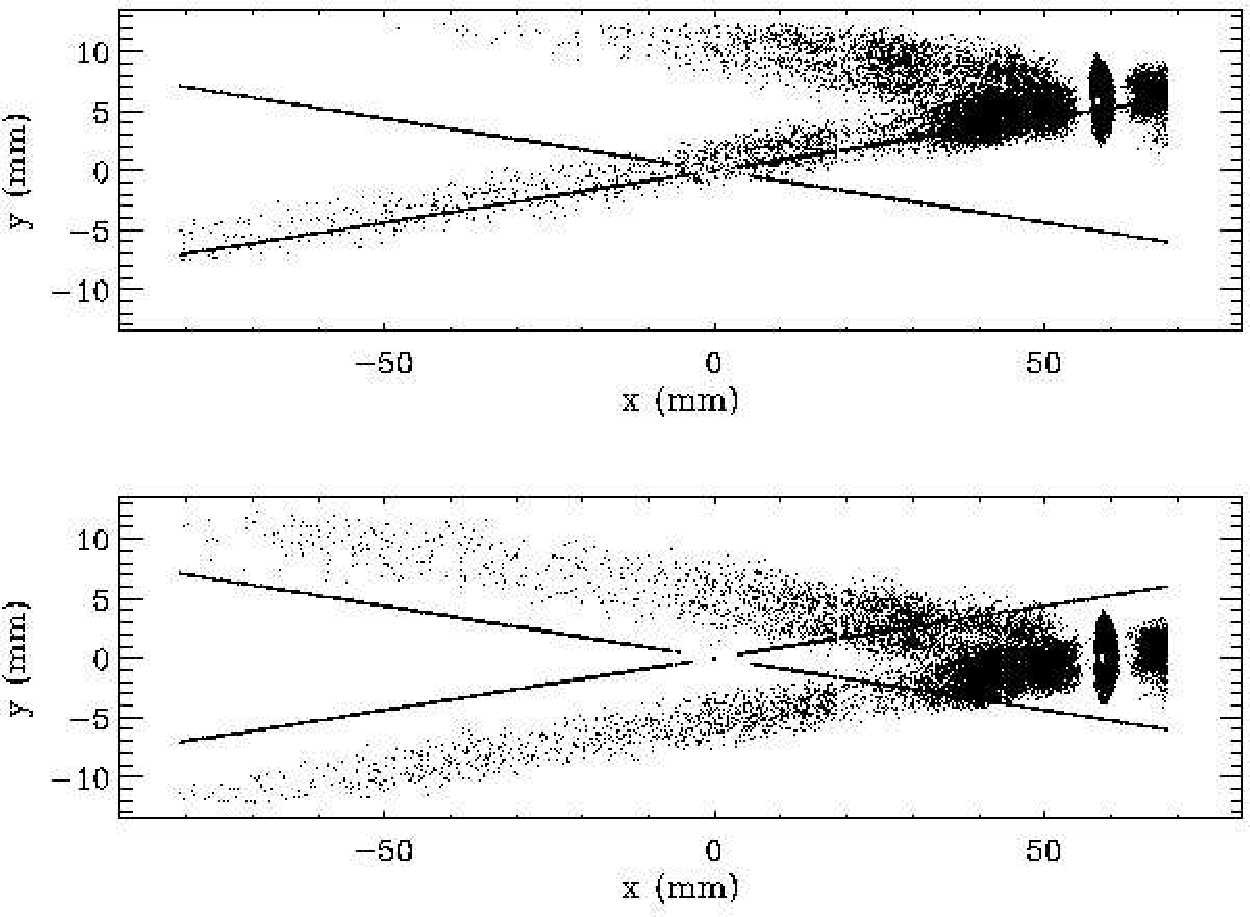
Figure 8.27: A
simulation of spectral contamination caused by a second source in the
field. The image of the dispersed spectrum from the second source is
seen in the upper right hand corner for particular choice of roll
angle. Note that the image is highly extended as the source is 20
arcmin off-axis. For this roll angle, there is significant overlap of
the two images. In the lower panel we show the same situation, but for
a different choice of roll angle. Here the overlap of the images is
minimal and data analysis will be further aided through the use of
energy discrimination provided by the ACIS-S detector.
A Strong Source Lying Outside the Field
The proposer should also take into consideration sources, other than
the target, that are within the field of view of the telescope, but
out of the field of view of the detector. Parts of the image of the
dispersed spectrum may still fall onto the detector. If this presents a problem; a sensible choice of a range of allowable roll
angles might ameliorate the situation.
8.5.3 Extended Sources and Spatial-Spectral Effects
The case of a simply extended, spectrally homogeneous source was
described in Section 8.2.2, under the heading, "Extended
and off-axis targets". Here more complex cases are briefly
considered; generally these must be treated on a case-by-case basis.For extended sources
with multiple
condensations, careful selection of the roll angle (see
e.g. Section 8.5.2) might make the data easier to
analyze and interpret. It may also be possible to model the spectrum
given information from the zero order image and/or a short ACIS exposure with the grating retracted. The ACIS spectrum can then be
used as an initial guess in modeling the dispersed HEG and MEG spectra.
The diffracted images of extended objects which lead to position-dependent spectra are complicated. The complexity indicates that
information is present but extracting the information is more
difficult than for a point or an extended source with a
uniform spectrum. For example, the plus and minus order images may
not have the same appearance. An example of this effect was seen in
ground test data using the double crystal monochromator source;
e.g., test image H-HAS-EA-8.003 which is schematically presented and
described in Figure 8.28. For astrophysical
sources, variations in temperature, abundances, Doppler velocities,
cooling flows, etc. can all create spatial-spectral variations. For
these complex objects general analysis techniques are not available
and forward folding of the spatial-spectral model through MARX is
the best way to study these effects and to plan potential
observations.
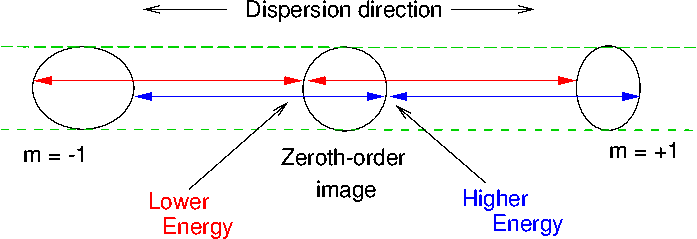
Figure 8.28: HETGS spatial-spectral
effect example. In this schematic, a zeroth-order ring image emits at
an energy which varies across the ring's diameter in the dispersion
direction emitting lower-energy photons on the left and higher-energy
photons on the right. The resulting diffracted images in ±1st
orders have different appearances due to the spatial-spectral
interaction. In the cross-dispersion direction, however, the images
have the same extent.
8.5.4 Optimizing Detection of Isolated Emission Lines: Choice of
Spectrometer
If the scientific objectives require detecting emission lines against
a moderately bright source continuum, then the signal/noise ratio
depends on the effective area of the instrument in combination with
the spectrometer resolving power. Here, we compute the relative
merits of each Chandra spectrometer in this context. Three cases where
this analysis will not apply are when: (1) detecting weak lines that
may blend with stronger lines, (2) observing significantly extended
sources, and (3) observing lines that are substantially broadened. In
case 1, the highest resolving power at the energy of interest would be
indicated. Case 2 will require that the reduction of the grating
resolution for extended sources, discussed in
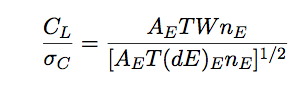
Section 8.2.2, be included.When a line is isolated and appears against a "background" due
primarily to the source continuum, then the signal/noise ratio is
given by:
|
|
CL
σC
|
= |
AE T W nE
[AE T (dE)E nE]1/2
|
|
| (8.1) |
where CL is the number of counts in the emission line, σC
gives the uncertainty in this number, AE is the instrumental
effective area, T is the integration time, nE is the photon flux
in the continuum in units of photon cm−2 s−1 keV−1, W
is the equivalent width of the line in keV, and (dE)E is the
spectral resolution of the spectrometer in keV. The signal-to-noise
ratio per fractional equivalent width, Wf = W/E, is then:
|
|
CL/σC
Wf
|
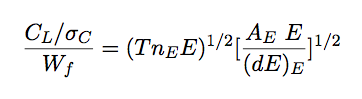
= (TnEE)1/2[ |
AE E
(dE)E
|
]1/2 |
| (8.2) |
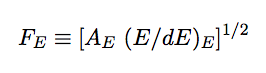
This last instrument-specific term is the figure of merit for
the spectrometers:
which can be compared for different instruments at the desired energy.
Of course, all these considerations are tempered by the additional features of each instrument setup. For example, this calculation does not take into account instrumental background effects nor the additional continuum that may result from higher energy flux detected in higher orders when the LETG is used with the HRC-S. The reduction of the line detectability then depends on the source spectrum.
8.6 Simulations with MARX
For sources with spatial or spectral complexity, observation planning
is best carried out using the MARX simulator to create a simulated
data set. These data can then be analyzed with the same tools as
flight data in order to demonstrate the feasibility of extracting
useful results from a proposed observation.MARX is a suite of programs designed to simulate the on-orbit
performance of Chandra. It is built around a core program or engine
which performs a ray trace of photon paths through all elements of the
Chandra observatory. The user specifies a file containing the spectral
energy distribution of the source to be simulated and then selects a
model for the spatial distribution of the source, which can be a FITS
image. More complicated "user source models" allow simulation of
sources with spatial-spectral variations.
Once the source has been specified, MARX traces the path of photons
through a model of the HRMA. Models for the High Energy Transmission
Grating (HETG) and Low Energy Transmission Grating (LETG) can also be
included and, in the focal plane, the user has the choice of all four
Chandra detectors. The result of the simulation is converted with
marx2fits into a FITS event file which can then be processed
with standard CIAO tools.
The latest capabilities and instructions for use of MARX are given
in the MARX User Guide at the MARX web site,
http://space.mit.edu/CXC/MARX/
and in analysis threads available at http://cxc.harvard.edu/ciao/threads/index.html.
WWW resources:
http://cxc.harvard.edu/cal/- CXC Instruments and Calibration page
http://cxc.harvard.edu/caldb/ - CXC CALDB page
http://space.mit.edu/HETG/- HETG home page
http://space.mit.edu/CXC/ - CXC at MIT, focusses on gratings
http://wwwastro.msfc.nasa.gov/xray/xraycal/ - MSFC ground cal site
8.7 References
Canizares, C.R., Schattenburg, M.L. and Smith, Henry I. 1985,
"The High Energy Transmission Grating Spectrometer
for AXAF", SPIE, 597, 253.
Canizares, C.R. et al. 2000, "Initial Results
from the Chandra High Energy Transmission Grating Spectrometer",
Atomic Data Needs for X-ray Astronomy,
M.A. Bautista, T.R. Kallman, and A.K. Pradhan, eds.
http://heasarc.gsfc.nasa.gov/docs/heasarc/atomic/
Canizares, C.R. et al. 2000, , 539, L41.
Canizares, C.R. et al. 2005, , 117, 1144.
Davis, J.E., H.L. Marshall, M.L. Schattenburg,
and D. Dewey, 1998, "Analysis and Modeling of Anomalous Scattering
in the AXAF HETGS", SPIE, 3444, 76.
Dewey, D., Drake, J.J., Edgar, R.J., Michaud, K.,
and Ratzlaff, P., 1998, "AXAF Grating Efficiency Measurements with Calibrated,
Non-imaging Detectors", SPIE, 3444, 48.
Dewey, D., Humphries, D. N., McLean, G. Y., and Moschella, D. A.
1994, "Laboratory Calibration of X-Ray
Transmission Diffraction Gratings", SPIE, 2280, 257.
Edgar, R.J., 2003,
Chandra X-ray Center memo dated 6/9/2003,
http://cxc.harvard.edu/cal/Acis/Cal_prods/qe/ACIS_QE_O_S23.ps.
Edgar, R.J., & Vikhlinin, A.A., 2004,
Chandra X-ray Center memo dated 8/11/2004,
http://cxc.harvard.edu/cal/Acis/Cal_prods/qe/qe_memo.ps.
Flanagan, K. A., Dewey, D. and Bordzol, L. 1995, "Calibration and
Characterization of HETG Grating Elements at
the MIT X-ray Grating Evaluation Facility", SPIE, 2518, 438.
Flanagan, K.A., et al., 2000,
"Modeling the Chandra High Energy Transmission Gratings below 2 keV"
SPIE, 4140, 559.
Markert, T.H., Canizares, C.R., Dewey, D., McGuirk, M.,
Pak, C., and Schattenburg, M.L. 1994, "The High
Energy Transmission Grating for AXAF", SPIE, 2280, 168.
Markert, T. H. et al., 1995,
"Modeling the Diffraction Efficiencies of the AXAF High Energy
Transmission Gratings", SPIE, 2518, 424
Marshall, H.L. et al. 1997,
"Towards the Calibration of the HETGS Line Response Function",
SPIE, 3113, 160.
Marshall, H.L., Dewey, D., Schulz, N.S., and Flanagan, K.A., 1998,
"Spectral Features in the AXAF HETGS Effective Area
using High-signal Continuum Tests", SPIE, Vol. 3444, 64.
Marshall, H.L., D. Dewey, and K. Ishibashi, 2004, "In-Flight
Calibration of the Chandra High Energy Transmission Grating
Spectrometer", Proc. SPIE, Vol. 5165, 457.
Marshall, H.L., Tennant, A., Grant, C., Hitchcock, A.P.,
O'Dell, S., and Plucinsky, P.P., 2004, "Composition of the
ACIS Contaminant", SPIE, 5165, 497.
Marshall, H.L., 2005,
Chandra X-ray Center memo dated 10/14/2005,
http://space.mit.edu/ASC/calib/heg_meg/meg_heg_report.pdf.
Marshall, H.L., 2012, "Updating the Chandra HETGS Efficiencies
using In-Orbit Observations", SPIE, 8443, in press,
http://arxiv.org/abs/1211.0017.
Schattenburg, M.L. et al. 1991, "Transmission
Grating Spectroscopy and the Advanced X-ray
Astrophysics Facility", Optical Engineering, 30, 1590.
Schattenburg, M.L., Ancoin, R.J., Flemming, R.C., Plotnik,
I., Porter, J., and Smith, H.I. 1994, "Fabrication
of High Energy Transmission Gratings for AXAF", SPIE, 2280, 181.
Schulz, N.S., Dewey, D., Marshall, H.L. 1998
"Absolute Effective Areas of HETG", SPIE, 3444, 160.
Smith, M.J.S., & Marshall, H.L., 2012,
"XMM-Newton - Chandra Blazar Flux Comparison",
presented at the 7th IACHEC meeting
http://web.mit.edu/iachec/meetings/2012/Presentations/Smith.pdf.
Weisskopf, M.C. et al. 2004, Än Overview of the
Performance of the Chandra
X-Ray Observatory", Experimental Astronomy, Vol. 16, no. 1, 1.
"X-ray Spectroscopy in Astrophysics", 1999,
Springer-Verlag, ed. van Paradijs, J., & Bleeker,
Last modified:12/13/12